How to Plant Succulents: Pots, Soil and Outdoor Beds

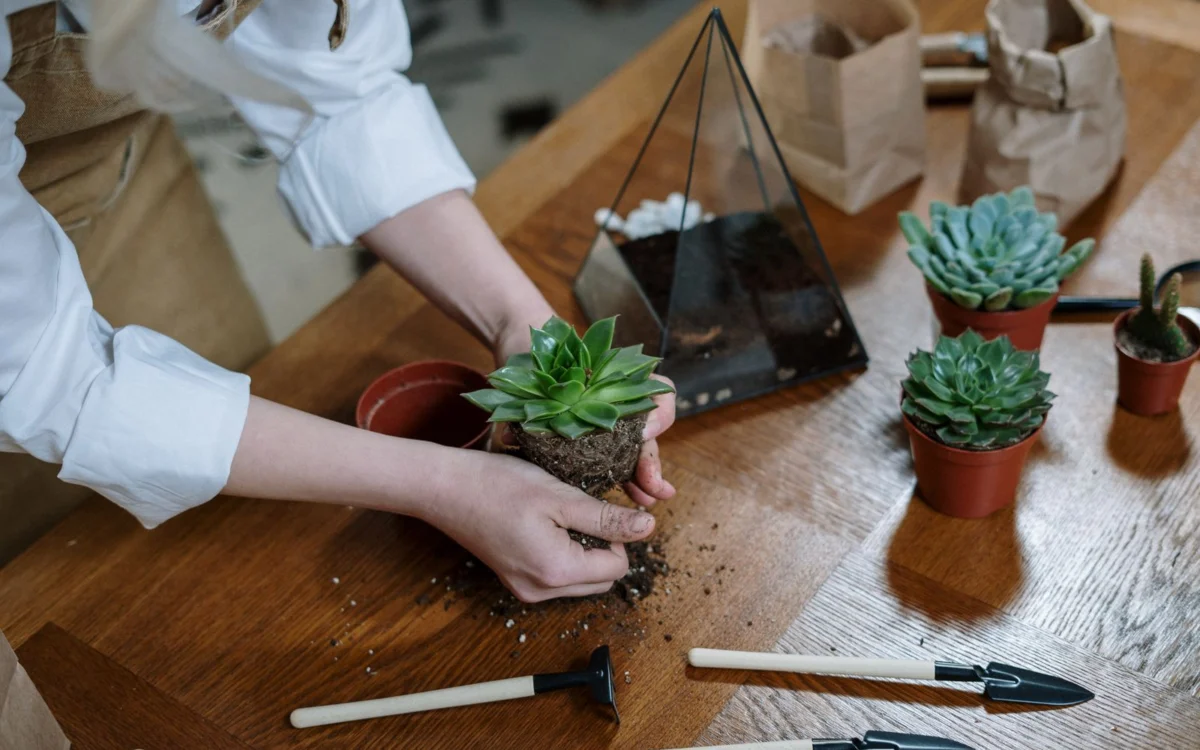
To plant succulents, use a pot with a drainage hole and a fast-draining mix of about one part potting soil to two parts grit (perlite, pumice or coarse sand). Set the plant at the same depth it grew before, firm the mix around the roots, and keep about 1 inch of space below the rim. Then put it in bright light and water sparingly. Too much water is the most common way succulents die.
The rest of this guide covers each step: the right pot, the mix, planting indoors and outside, and what to do in the first weeks.
What You Need
- Succulents (nursery plants or rooted cuttings)
- A pot with a drainage hole. Terracotta or unglazed clay is ideal because it dries out faster.
- Cactus and succulent mix, or your own mix (recipe below)
- Perlite, pumice or coarse sand (if you mix your own)
- Optional: pea gravel or crushed granite for a top layer
- A small trowel or spoon, a chopstick, and gloves or folded paper for spiny plants
Step 1: Choose the Right Pot
The pot matters more than most people think.
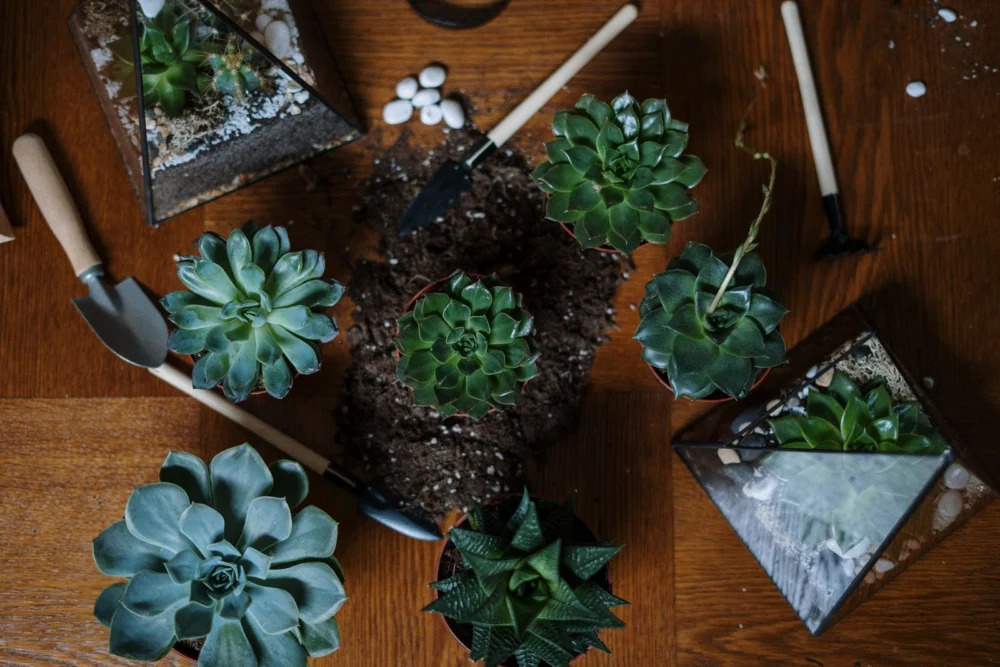
- It must have a drainage hole. Water that can’t escape sits around the roots and rots them.
- Pick a pot only a little wider than the root ball. A pot that is too big holds extra wet soil that takes a long time to dry out.
- Terracotta and clay are best for beginners. They breathe and dry faster than glazed ceramic, plastic or glass.
What about a pot with no hole? A layer of gravel at the bottom is not a fix. Iowa State Extension says a gravel “drainage layer” does not replace a drainage hole, because water still collects at the bottom. Instead, plant in a plain nursery pot with holes and set it inside the decorative pot (a “double pot”). Empty any water that collects in the outer pot within a few hours.
Step 2: Mix the Right Soil
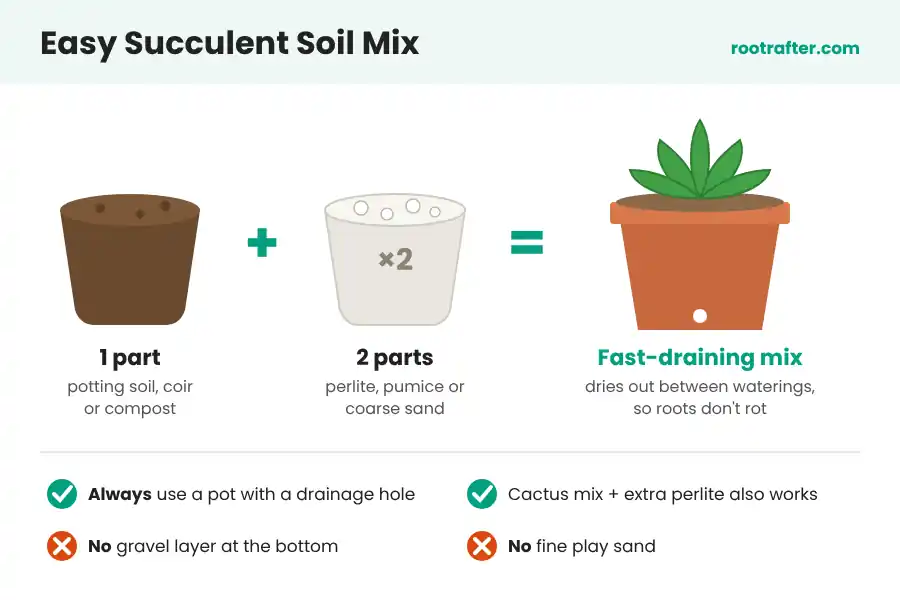
Normal potting soil holds too much water for succulents on its own. You have two options:
- Buy a bagged “cactus and succulent” mix. It’s the easiest choice. Many bagged mixes still hold a lot of water, so adding a few handfuls of perlite or pumice helps.
- Make your own. Use these simple recipes from university gardening experts:
| Recipe | Organic part | Gritty part | Source |
|---|---|---|---|
| Simple 1:2 mix | 1 part potting soil, compost, coir or pine bark | 2 parts perlite, pumice, coarse sand or fine gravel | Iowa State Extension |
| Three-way mix | 1/3 potting mix | 1/3 coarse sand + 1/3 pumice | UC Master Gardeners |
| Indoor dish garden | 1 part potting mix | 1 part perlite or coarse sand | Univ. of Illinois Extension |
Don’t use fine play sand. It packs down and holds water. Use coarse sand, or skip sand and use perlite or pumice.
Step 3: How to Plant Succulents in Pots (Step by Step)
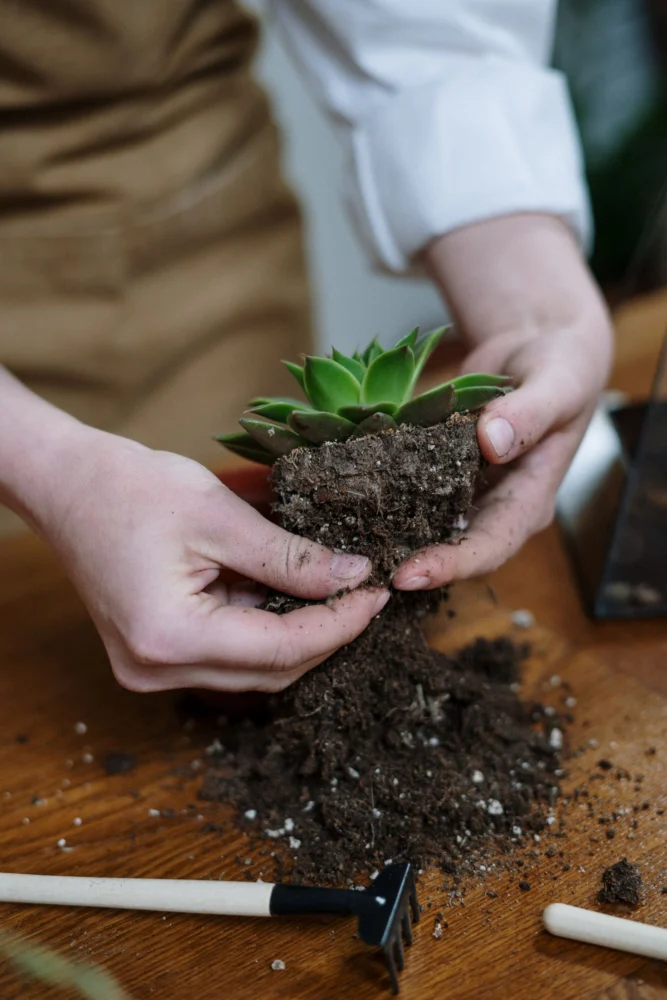
- Prepare the plant. Gently ease it out of its nursery pot. Loosen circled roots with your fingers and shake off loose old soil. Remove any dead or mushy roots and any shrivelled lower leaves.
- Fill the pot partway. Add mix until the top of the root ball will sit about 1 inch below the rim.
- Set the plant at the same depth it grew before. Don’t bury the leaves or the base of the stem. Soil against the leaves can cause rot.
- Fill around the roots. Add mix around the sides and firm it lightly with your fingers or a chopstick so the plant stands up straight.
- Leave about 1 inch below the rim. This gives water room to soak in instead of running over the edge.
- Add a top layer (optional). A thin layer of pea gravel or crushed granite looks neat and helps keep the stem base dry.
- Handle spiny plants safely. Hold cacti with thick gloves or a folded band of paper wrapped around the plant.
Planting several succulents in one bowl? Group plants that need the same light and water. Leave a little space between them so air can move. Tightly packed arrangements look great on day one but stay damp and crowded.
Step 4: Water After Planting (Or Wait?)
This is where advice disagrees, so here is both sides:
- UC Master Gardeners say don’t water succulents right after planting.
- Iowa State Extension says to water lightly after planting.
A simple rule: if you broke roots, trimmed roots or planted a bare-root plant, wait about a week before watering so any damaged roots can heal. This is also what most experienced growers on succulent forums advise. If the root ball went in whole and the mix is very dry, a light watering is fine.
After that, use a soak-and-dry cycle:
- Water thoroughly until water runs out of the drainage hole.
- Then let the mix dry out before you water again. Push a finger a couple of inches into the mix. If it’s still damp, wait a few days.
- Indoors, Iowa State suggests starting at about every 2–3 weeks and adjusting from there. Plants dry out faster in summer and much slower in winter.
- Never leave water standing in a saucer or outer pot for more than a few hours.
Step 5: Give Them Enough Light
Most succulents need a lot more light than people expect.
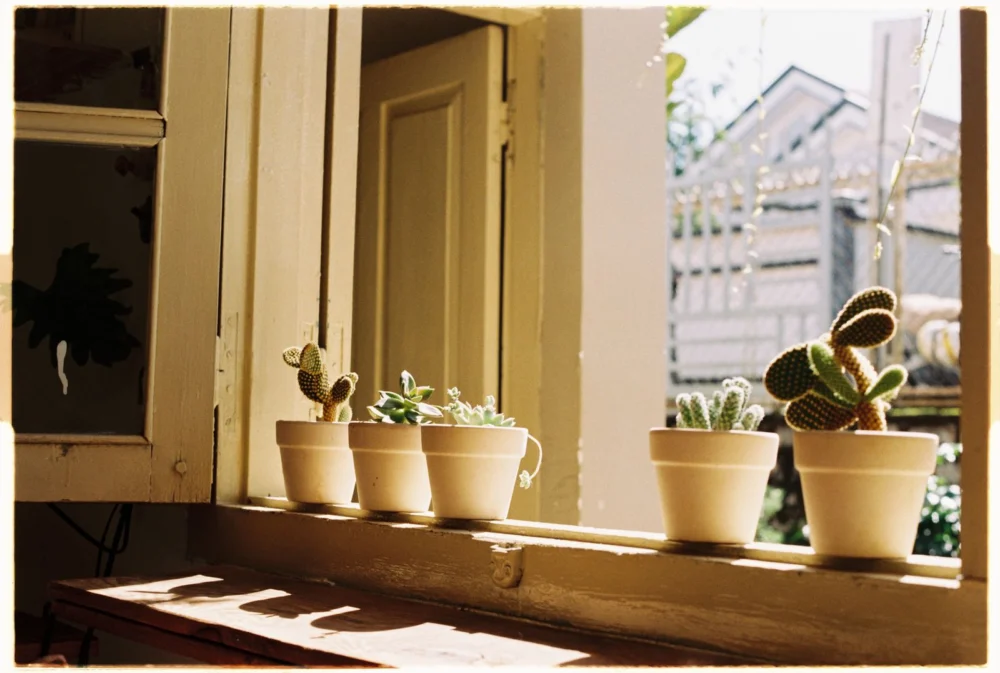
- Indoors: place them in your brightest spot. A south- or west-facing window is usually best. Iowa State says most need at least 6–8 hours of bright light, and ideally more.
- Signs of too little light: the plant stretches, leans toward the window and its leaves spread apart. This is called etiolation. Move it to brighter light. The stretched part won’t shrink back, but new growth will be compact.
- Turn the pot every week or two so the plant grows evenly.
- Grow lights (full-spectrum LED) work well in dark homes and northern winters.
How to Plant Succulents Outside
Planting in the ground follows the same idea: fast drainage, the right depth and not too much water.
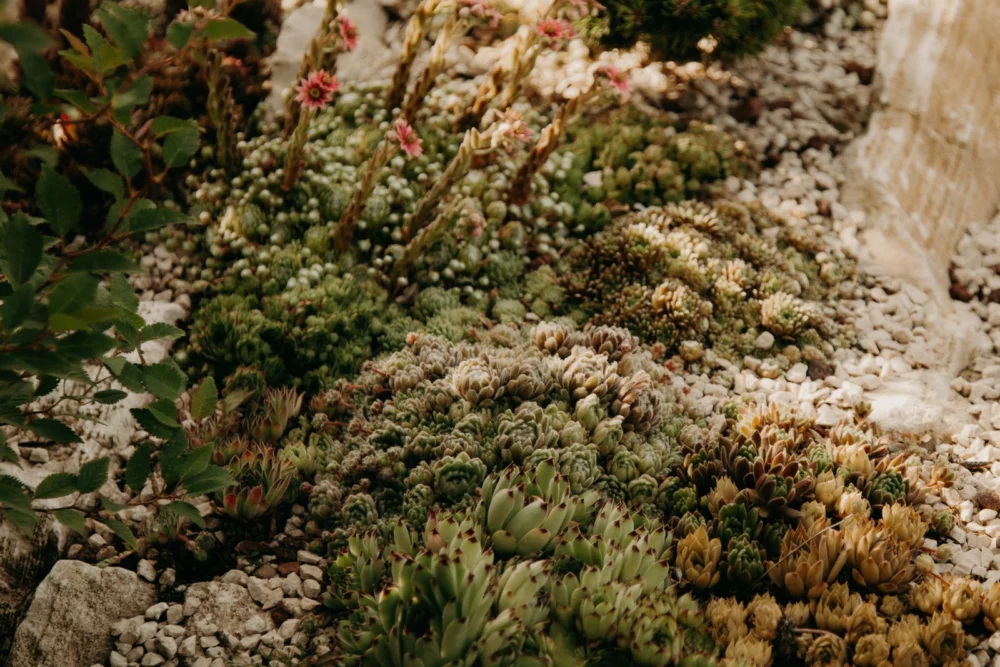
- Check that your plants can handle your winters. Many popular succulents (echeveria, jade, aloe) are not frost-hardy and must come indoors before freezing nights. Hardy types like hens and chicks (Sempervivum) and many sedums can stay outside year-round in much of the US. Check the plant tag for its USDA hardiness zone.
- Plant in spring after your last frost, so roots can settle before summer heat and winter cold.
- Pick a sunny spot with good drainage. Avoid low areas where rain puddles.
- Improve heavy soil. Mix in pumice, crushed lava rock or coarse grit, and mound the soil up a few inches so water drains away from the roots. In very heavy clay, a raised bed or large container is easier.
- Plant at the same depth as in the nursery pot, firm the soil and add a gravel top layer.
- Ease plants into full sun. Plants raised indoors or in a shaded greenhouse can sunburn (pale or brown patches) if moved straight into strong sun. Give them a week or two of morning sun or light shade first.
Indoor vs Outdoor Succulents: Quick Comparison
| In pots indoors | In the ground outside | |
|---|---|---|
| Best time to plant | Any time of year | Spring, after last frost |
| Soil | Cactus mix + extra perlite or pumice | Native soil mixed with grit and mounded |
| Light | South/west window, 6–8+ hours, or grow light | Full sun (ease plants in first) |
| Watering | Soak, then let dry; start every 2–3 weeks | Less often; rain may be enough in many areas |
| Winter | Water much less, keep in bright light | Only frost-hardy types stay out |
| Biggest risk | Rot from wet soil and low light | Frost and soggy winter soil |
Common Succulent Planting Problems (and Fixes)
- Soft, yellow or see-through leaves: too much water. Stop watering, let the mix dry fully and check the roots. Cut away any black or mushy parts.
- Wrinkled, deflated lower leaves: usually thirst. Water thoroughly and the leaves should plump up within a few days. (A few dry leaves at the very bottom are normal as the plant grows.)
- Stretched, pale growth: not enough light. Move it closer to a bright window or add a grow light.
- Brown or white scorched patches: sunburn from sudden strong sun. Move to lighter shade and adjust slowly.
- Plant wobbles in the pot weeks later: roots may have rotted. Lift it out and check.
7 Mistakes Real Growers Make (From Plant Forums)
These come up again and again in beginner threads on succulent forums:
- Using a pot with no drainage hole. The most common problem by far. The roots sit in soggy soil and rot. If you love a pot without a hole, use the double-pot trick.
- Leaving water in the saucer. Even with a drainage hole, a saucer that’s always full keeps the soil soaked. Empty it after watering.
- Keeping the soil the plant came in, or using plain potting soil. Shop soil and normal potting mix often stay wet for days. Repot into a gritty mix (see the recipes above).
- Watering right after repotting. Growers who repot into dry mix usually wait about a week so broken roots can heal, then water once the plant looks like it wants a drink.
- Choosing a pot that is far too big or deep. Extra soil means extra water around the roots. Pick a pot just a little bigger than the root ball.
- Not giving enough light. Many “what did I do wrong?” posts get the same answer: it needs far more light. Stretched, leaning plants are the sign.
- Moving a plant into strong sun all at once. Plants that lived indoors can scorch and drop leaves if they suddenly get hot midday sun. Increase sun gradually.
Two more to check on store-bought plants: remove any glued-on decorative rocks, and look for a small mesh plug or bag around the roots of tiny succulents. Take it off before planting so the roots can spread.
Are Succulents Safe for Pets?
Some are not. The ASPCA lists popular succulents such as jade plant and aloe as toxic to cats and dogs. Others, like haworthia and echeveria, are listed as non-toxic. Check each plant on the ASPCA’s toxic plant list, and keep any plant you’re unsure about out of reach.
FAQ
Can I plant succulents in a pot without a drainage hole?
It’s risky. Gravel at the bottom does not fix it. Plant in a nursery pot with holes and place that inside the decorative pot, then empty any collected water.
What is the best soil for succulents?
A fast-draining mix of about one part potting soil to two parts perlite, pumice or coarse sand. A bagged cactus mix with extra perlite also works.
Should I water succulents right after planting?
Experts disagree. If you damaged or trimmed roots, wait several days to a week. If the root ball is whole and the mix is dry, a light watering is fine.
How deep should I plant a succulent?
At the same depth it was growing in its nursery pot. Keep the leaves and lower stem above the soil.
When is the best time to plant succulents outside?
In spring, after your last frost date. Only frost-hardy types like hens and chicks and many sedums should stay outside in freezing winters.
How much light do succulents need indoors?
Most need at least 6–8 hours of bright light a day. A south- or west-facing window or a grow light works best.
Final Thoughts
Planting succulents comes down to three things: a drainage hole, a gritty mix and plenty of light. Plant them at the right depth, go easy on the first watering, and let the soil dry between drinks. Get those right and most succulents need very little else.
Want more easy houseplants? See our guides on how to propagate pothos, how to care for orchids and Christmas cactus care.
Tiny flies around your pots? Here is how to get rid of fungus gnats.