Toilet Keeps Running? How to Fix It Yourself

If your toilet keeps running, the cause is almost always one of three cheap parts inside the tank: the flapper (leaking water into the bowl), the float (set too high, so water spills into the overflow tube) or the fill valve (stuck open or clogged with grit). Lift the tank lid and check where the water is going. That tells you which part to fix, and most fixes take less than 30 minutes and cost under $20.
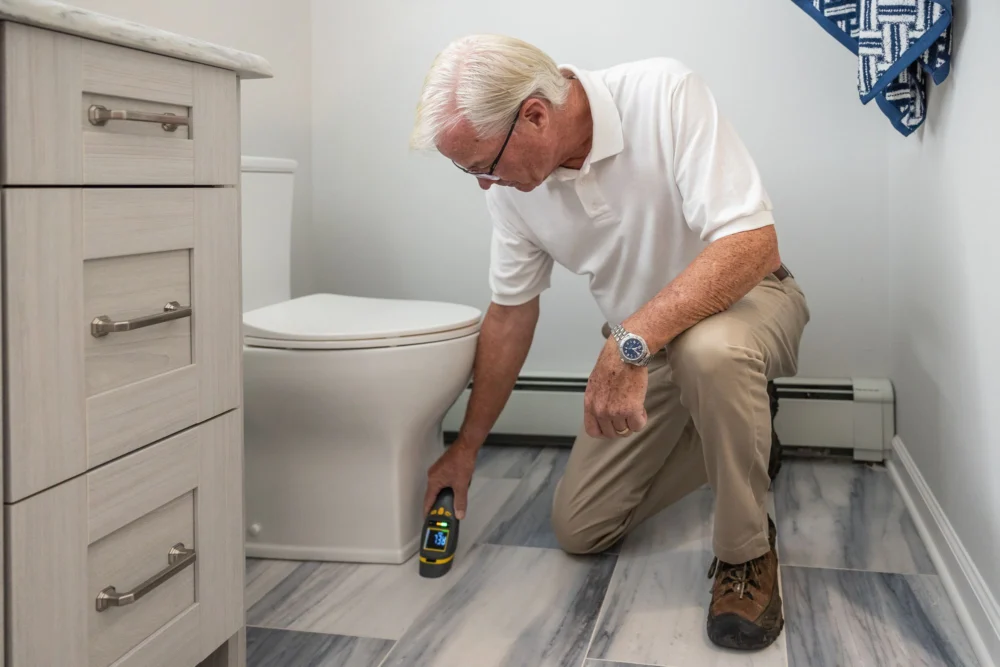
Quick Answer: Find the Cause in 2 Minutes
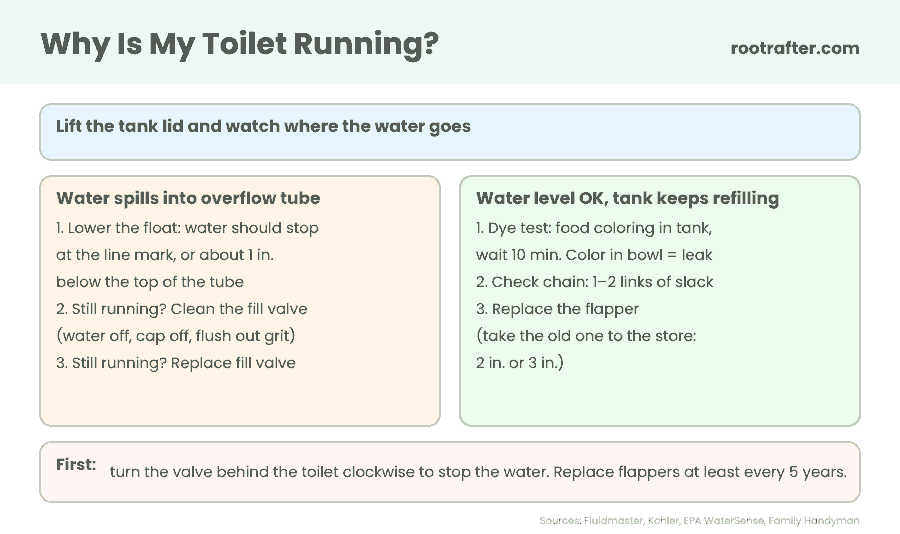
- Lift the tank lid and watch while the toilet runs.
- Is water pouring into the overflow tube (the open pipe in the middle)? The water level is too high or the fill valve isn’t shutting off.
- Is the water level below the overflow tube but the tank keeps refilling? The flapper is leaking water into the bowl.
- Is the flapper held open? The chain is too short or tangled, or the handle is sticking.
How a Toilet Tank Works (30-Second Version)
- When you flush, the handle pulls a chain, which lifts the flapper at the bottom of the tank. Water rushes into the bowl.
- The flapper drops and seals the hole again.
- The fill valve (the tall part on the left) refills the tank. A float rises with the water and shuts the valve off at the right level.
- The overflow tube is a safety drain. If the water gets too high, it spills down this tube into the bowl, so the tank never floods the floor.
A running toilet means one of these steps isn’t finishing.
Step 1: Check the Chain and Handle
Kohler lists a binding trip lever as one of the main causes.
- If the chain is too short, it holds the flapper slightly open.
- If it’s too long, it can get caught under the flapper.
- Kohler says the chain “should have roughly one to two links of slack.” Family Handyman says just slightly slack when the flapper is down. Cut off any extra chain so it can’t tangle.
- Make sure the handle and arm move freely and drop back down after a flush.
Step 2: Do the Dye Test for a Leaking Flapper
The EPA’s simple test:
- Put a few drops of food coloring in the tank (not the bowl).
- Don’t flush. Wait 10 minutes.
- If color shows up in the bowl, the flapper is leaking.
- Flush afterward so the dye doesn’t stain the tank (EPA).
Fluidmaster uses a different check: turn off the water at the wall valve, mark the water level in the tank, and wait 10 to 15 minutes. If the level drops, replace the flapper first, “as this is the most common problem.”
Toilet refills by itself every so often? That’s called a “phantom flush.” The EPA says a worn flapper can make a toilet “flush on its own or silently leak.”
Step 3: Adjust the Float (Water Too High)
If water is spilling into the overflow tube, the water level is set too high. Family Handyman explains that if the float is set too high, “water spills into the toilet overflow tube and the fill valve won’t shut off.”
- Find the right level: look for a water line mark on the inside back of the tank. No mark? Family Handyman says to measure about 1 inch down from the top of the overflow tube.
- Newer fill valves (float cup on the valve): turn the adjustment screw or slide the clip down the rod to lower the float.
- Older toilets (ball on an arm): gently bend the float arm down, or turn the screw where the arm meets the valve.
- Flush and check. Keep adjusting until the water stops at the mark (Family Handyman).
Step 4: Clean or Replace the Fill Valve
If the float is set correctly but water still runs into the overflow tube, the fill valve isn’t closing. Both Fluidmaster and Kohler say the usual cause is debris stuck in the valve, and both say to clean it first.
- Turn off the water at the shut-off valve behind the toilet (clockwise).
- Remove the cap on top of the fill valve (check your valve’s instructions; many twist off).
- Hold a cup upside down over the open valve and turn the water on briefly to flush out grit (Kohler shows this method).
- Reassemble and test.
Kohler says to replace the fill valve if the toilet still runs after flushing it out. Replacement fill valves are sold as universal kits at hardware stores. When you install a new one, Family Handyman says to tighten the locknut “a half turn past hand tight.” Don’t overtighten it, because the tank is porcelain.
Kohler adds that this problem is common right after a repair or new install, because turning the water on and off can loosen sediment in the pipes.
Step 5: Replace the Flapper
If the dye test showed a leak, a new flapper is the fix. The EPA says to check flappers regularly and replace them “at least every five years.”
- Turn off the water and flush to empty the tank.
- Unhook the chain and pull the old flapper off its two side pegs (or off the ring on the overflow tube).
- Take the old flapper to the store to match it (EPA, Family Handyman). Flappers come in 2-inch and 3-inch sizes (Fluidmaster).
- Fit the new flapper, reconnect the chain with a little slack, and turn the water back on.
Still leaking with a new flapper? Family Handyman says the seat under the flapper may be “rough or pitted.” Seat-repair kits are available. Fluidmaster’s last step is to replace the whole flush valve.
Dual-flush toilets don’t have a flapper. They use a flush valve with a rubber seal, and Reddit plumbers say that worn seal is a common cause of running. Look up your toilet’s model for the right seal.
How Much Water Does a Running Toilet Waste?
A lot more than most people think. The EPA says a worn flapper can silently leak “thousands of gallons a year,” and the average household’s leaks waste more than 9,300 gallons a year. A new flapper costs little and can save a lot on your water bill.
7 Running Toilet Mistakes Real People Make (From Forums)
These come up again and again in Reddit plumbing threads:
- Buying a flapper when the fill valve is the problem. Look first: water in the overflow tube means float or fill valve, not flapper.
- Replacing the fill valve before cleaning it. A bit of grit is often the only problem.
- Setting the float too high. Water spills into the overflow tube and the toilet never stops.
- A chain with no slack. It holds the flapper open just enough to leak.
- Buying the wrong flapper size. Take the old one with you.
- Overtightening plastic nuts. You can crack the tank or the part.
- Ignoring a slow, quiet leak. It still wastes thousands of gallons.
When to Call a Plumber
- The shut-off valve won’t turn off the water fully, or it leaks.
- Water is leaking onto the floor around the tank bolts or the base.
- The tank or bowl is cracked.
- You’ve replaced the flapper and fill valve and it still runs.
Family Handyman notes these steps don’t apply to pressure-assist toilets (the kind with a sealed tank inside the tank). Those need parts from the manufacturer.
Clogged rather than running? See our guide on how to unclog a toilet without a plunger.
FAQ
Why does my toilet keep running after I flush?
Usually the flapper isn’t sealing, the chain is holding it open, or the float is set too high so water spills into the overflow tube.
Why does my toilet run for a few seconds every so often?
That’s a slow leak past the flapper. The tank drops, and the fill valve tops it up. Do the dye test and replace the flapper.
How do I stop a running toilet right now?
Turn the shut-off valve behind the toilet clockwise to stop the water, then fix the part when you have time.
How often should a toilet flapper be replaced?
The EPA says check it regularly and replace it at least every five years.
Is a running toilet an emergency?
Not usually, because the overflow tube stops it flooding. But it wastes water and money, so fix it soon.
Final Thoughts
A toilet that keeps running is one of the easiest plumbing fixes in the house. Look where the water is going, do the 10-minute dye test, and fix the right part: chain, float, fill valve or flapper. Most of the time you’ll be done in under 30 minutes for less than the cost of lunch out.