Rex Begonia Care: Light, Water, Humidity and Varieties

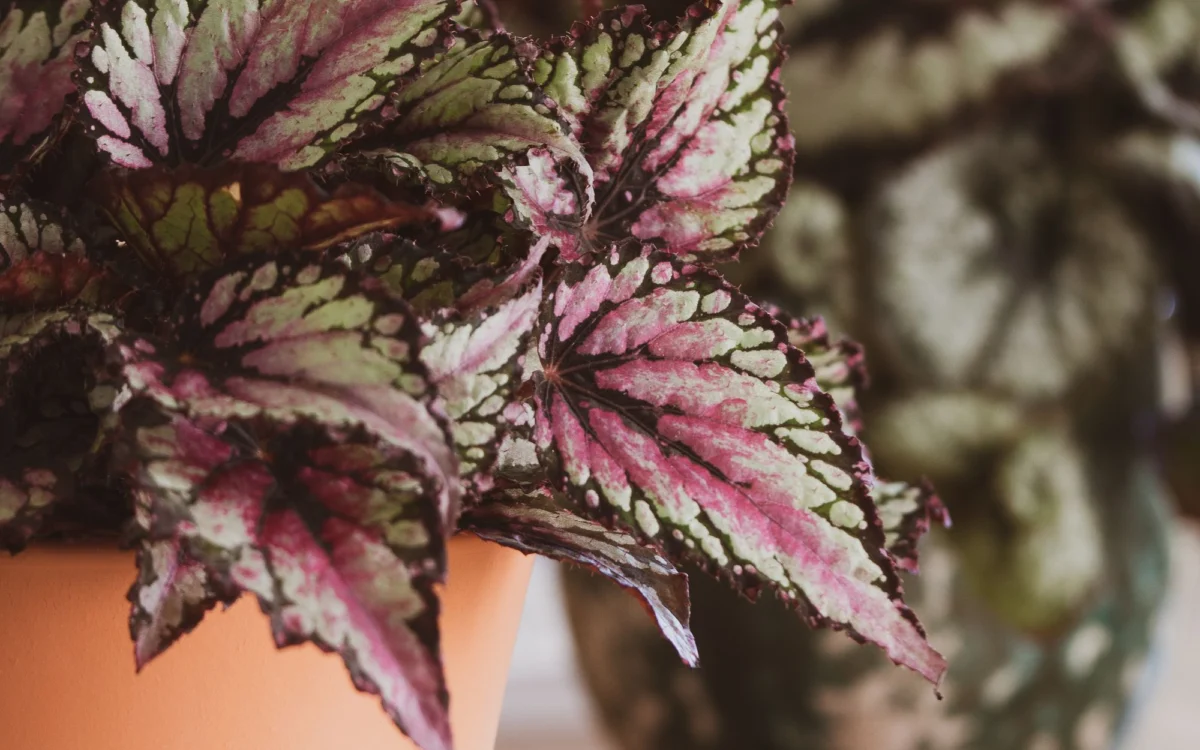
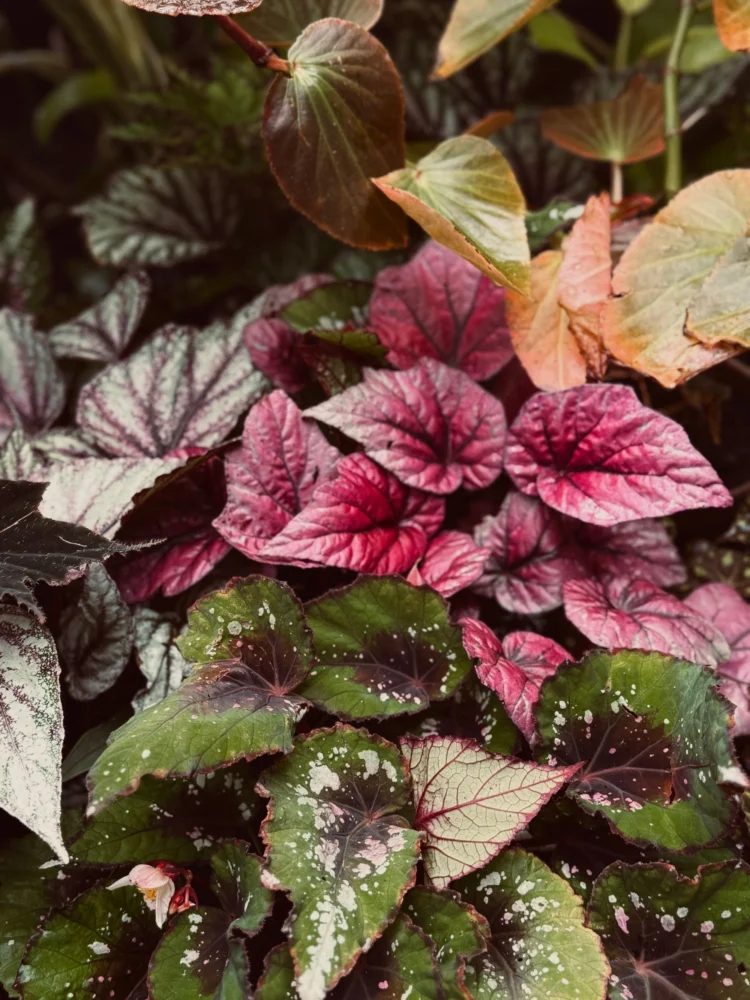
Begonia rex (also called rex begonia or painted-leaf begonia) is grown for its leaves, not its flowers. The leaves come in silver, purple, pink, red and near-black, often with swirls and spots. Care is simple once you know three rules: bright but indirect light, water only when the top inch of soil is dry, and more humidity than a normal room. Most rex begonias die from too much water, not too little.
Rex Begonia Care at a Glance
| What | What it needs |
|---|---|
| Light | Bright, indirect light; an east window is ideal |
| Water | When the top inch of soil is dry; never soggy |
| Humidity | Higher than average; pebble tray, humidifier or grouped plants |
| Temperature | About 60–80°F; keep above 55°F and away from drafts |
| Soil | Light, fast-draining mix (African violet mix works well) |
| Pot | Shallow and wide, with a drainage hole |
| Fertilizer | Weak liquid feed in spring and summer; none in winter |
| Pets | Toxic to cats and dogs (ASPCA) |
What Is a Begonia Rex?
Rex begonias are a large group of hybrid begonias (botanists call the group Begonia rex-cultorum). Their wild parents come from humid, shady forest floors in Asia. That background explains almost everything they need: soft light, steady moisture without wet feet, and humid air.
They grow from a rhizome, a thick stem that creeps along the top of the soil. The leaves grow up from it. This matters for two reasons: the rhizome rots if the soil stays wet, and it is also how you divide the plant later.
The small pink or white flowers are not the main show. Many growers pinch them off so the plant puts its energy into leaves.
Popular Rex Begonia Varieties
There are hundreds of named rex begonias. A few you’ll see often:
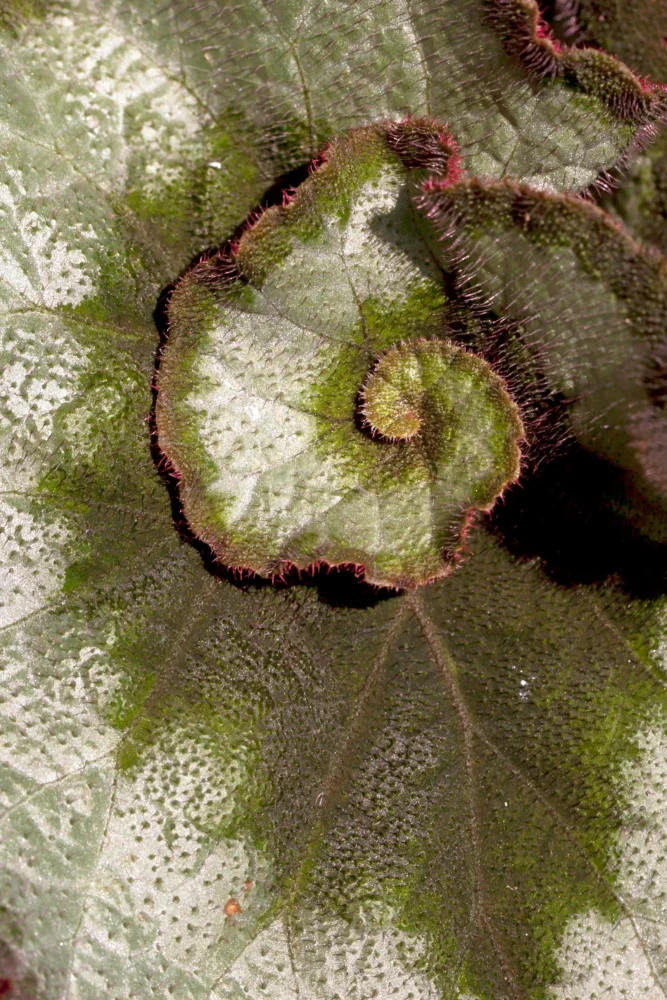
- Escargot: silver and green leaves that twist into a spiral, like a snail shell. One of the most searched rex begonias.
- Fireworks: silver leaves with dark purple veins and edges.
- Curly Fireflush: green leaves with a curl at the base and fine red hairs.
Care is the same for all of them. Plants sold simply as “rex begonia” or “painted-leaf begonia” in garden centers are also hybrids from this group.
Light
- Bright, indirect light is best. An east window is ideal (UConn).
- In a south or west window, set the plant a few feet back from the glass. Direct afternoon sun scorches the leaves.
- Too little light makes plants stretch, lose color and drop leaves in winter.
- Rex begonias also grow well under LED or fluorescent grow lights.
How to Water a Rex Begonia
This is where most rex begonias are lost.
- Water when the top inch of soil is dry. Push your finger into the mix. If it’s dry to the first knuckle, water. If it’s damp, wait.
- Water the soil, not the leaves. Wet leaves invite powdery mildew. Keep water off the center of the plant too.
- Empty the saucer after watering. The pot should never sit in water.
- Slightly too dry is safer than too wet. UConn and Costa Farms both say this. Roots are fine and rot quickly in soggy mix.
- Don’t let it go bone-dry either. Fully dried-out plants droop hard and can get stem damage.
- In winter, water less. Growth slows and the mix stays wet longer.
Humidity and Temperature
Rex begonias like more humidity than most homes have, especially in winter with the heating on.
- Pebble tray: fill a tray with pebbles and water, and stand the pot on the pebbles (not in the water).
- Group plants together or run a small humidifier nearby.
- Skip misting. It wets the leaves and doesn’t raise humidity for long. Master Gardeners don’t recommend it.
- Brown, crispy leaf edges are the classic sign of dry air (UConn, RHS).
Temperature: keep it at about 60–80°F. Growth slows below 60°F, and the RHS gives about 55°F as the winter minimum. Keep it away from cold windows, heaters and drafts.
Soil, Pots and Repotting
- Soil: a light, fast-draining mix. UConn suggests African violet mix. You can also add perlite or orchid bark to regular potting mix.
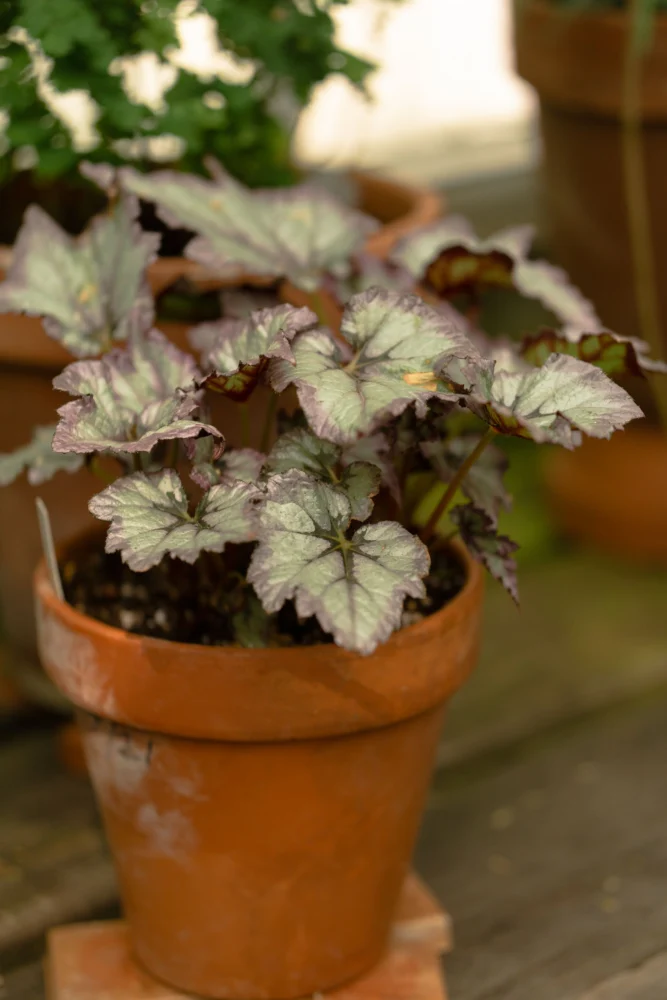
- Pot: shallow and wide, because the rhizome spreads sideways, not down. It must have a drainage hole.
- When to repot: when the rhizome reaches the edge of the pot, in spring. Go up only about one pot size.
- Don’t repot a new plant straight away. Let it settle into your home for a few weeks first.
Fertilizer
Experts don’t agree on how often, but all agree on weak feed, growing season only:
| Source | Advice |
|---|---|
| UConn | Quarter-strength liquid feed every 2–3 weeks in the growing season |
| Master Gardeners (Anoka County) | Half-strength balanced liquid feed every 2–4 weeks in spring and summer |
| Costa Farms | Once or twice a year is enough; more often gives faster growth |
Our take: start with quarter-strength every 2–4 weeks from spring to late summer, and stop feeding from October until new growth appears in spring.
Winter Rest
In low winter light, some rex begonias slow down and drop a few leaves. This is normal. Water less, keep the mix barely moist, don’t feed, and give it the brightest indirect light you have. New leaves come back as the days get longer.
How to Propagate a Rex Begonia
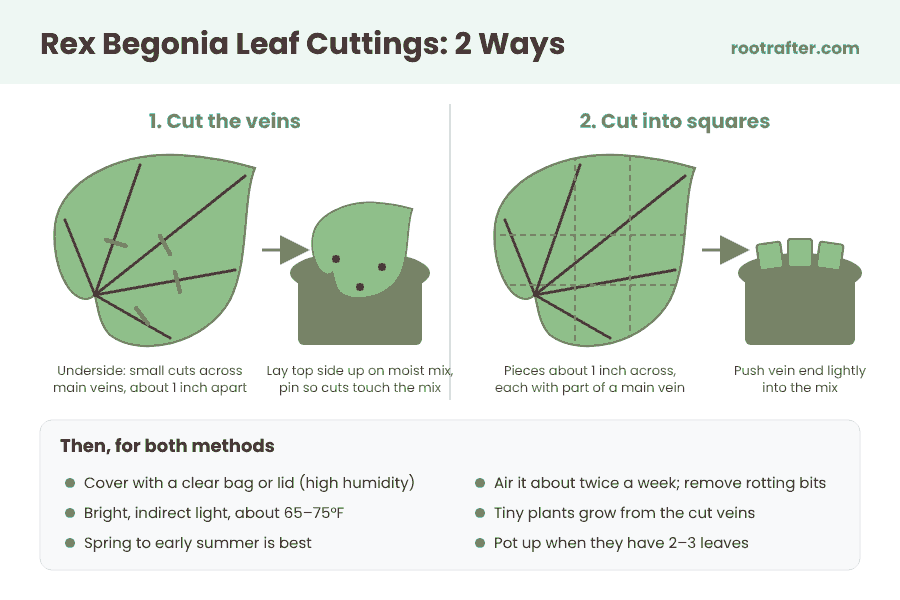
Rex begonias are one of the few plants you can grow from a single leaf. Spring to early summer is the best time.
Method 1: Leaf with cut veins (RHS)
- Choose a healthy, fully grown young leaf. Cut off the stalk.
- On the underside, make small cuts across the main veins, about 1 inch apart.
- Lay the leaf top side up on moist cuttings mix (half potting mix, half perlite or sand).
- Pin or weigh it down so the cuts touch the mix.
Method 2: Leaf squares or wedges Cut the leaf into pieces about 1 inch across, each with a piece of a main vein. Push the vein end lightly into the mix.
For both methods: cover with a clear bag or lid to keep humidity high, keep at about 65–75°F in bright, indirect light, and air it about twice a week. Small plants grow from the cut veins. Pot them up once they have two or three leaves.
Division: when you repot in spring, you can cut the rhizome into pieces. Each piece needs at least one growing point.
Common Rex Begonia Problems (and Fixes)
| What you see | Likely cause | Fix |
|---|---|---|
| Leaves droop, stems go soft and mushy at the base | Overwatering, root or stem rot | Cut off rotten parts, repot into fresh dry-ish mix, water less |
| Leaves “melt” soon after you bring it home | Shock: less humidity, new spot, repotting | Raise humidity, don’t repot yet, change one thing at a time |
| Crispy brown leaf edges | Dry air | Pebble tray, humidifier, group plants |
| White powder on leaves | Powdery mildew | Keep leaves dry, improve air flow; neem or horticultural oil (UConn) |
| Faded color, long stems | Too little light | Move to brighter indirect light |
| Pale, bleached or scorched patches | Direct sun | Move back from the window |
| White cottony bits in leaf joints | Mealybugs | Remove with a cotton swab; test any alcohol on one leaf first |
| Fine webbing, speckled leaves | Spider mites (hot, dry air) | Raise humidity; insecticidal soap |
7 Rex Begonia Mistakes Real Owners Make (From Plant Forums)
These come up again and again in “what’s wrong with my rex begonia?” threads:
- Watering on a schedule. Watering every few days whether it needs it or not is the top cause of rotten stems. Check the soil first.
- Repotting a new plant right away. Owners repot, move it to a new spot and water more, all in one week. The plant collapses from the stress. Make one change at a time.
- Moving it into a much bigger pot. Extra soil stays wet for days. Several owners lost most of their leaves after jumping from a nursery pot to a large pot.
- Swinging from soggy to bone-dry. Rex begonias like even moisture. Letting it dry out completely after overwatering just causes a different kind of damage. Constantly wet soil also invites fungus gnats.
- Ignoring humidity. Plants that came from a humid greenhouse often “melt” in dry homes, especially mail-order plants. Give them a humid spot while they adjust.
- Too much heat. Leaves wilt and droop on hot windowsills or next to heaters.
- Keeping old, tired soil. Old soil can stop soaking up water and just runs straight through. Fresh mix fixes it.
Is a Rex Begonia Toxic to Cats and Dogs?
Yes. The ASPCA lists begonias as toxic to cats, dogs and horses. They contain calcium oxalates that can cause vomiting and drooling. The most toxic part is underground, which for a rex begonia means the rhizome and roots. Keep it out of reach of pets that dig or chew. If a pet eats some, call your vet or the ASPCA Animal Poison Control Center at (888) 426-4435.
FAQ
Is begonia rex an indoor or outdoor plant?
Mostly indoor. It can spend summer outside in a shady, sheltered spot (the RHS says keep it shaded in summer), but bring it in before nights drop below about 55–60°F.
How often should I water a rex begonia?
Only when the top inch of soil is dry. That might be weekly in summer and much less in winter. Check with your finger, not the calendar.
Why are my rex begonia’s leaves turning brown and crispy?
Usually dry air. Add a pebble tray or humidifier, or group it with other plants.
Why is my rex begonia dying after I brought it home?
Most often it’s stress from a big change in humidity, light and watering at once. Keep it humid, don’t repot for a few weeks, and don’t overwater.
Do rex begonias need direct sun?
No. Bright, indirect light is best. Direct sun scorches the leaves.
Can you propagate a rex begonia in water?
Some people root leaf stems in water, but rooting leaf pieces on moist mix under a clear cover is more reliable and is the method the RHS describes.
Final Thoughts
Rex begonia care comes down to bright indirect light, water only when the top inch is dry, and extra humidity. Get those right, change one thing at a time, and its leaves will stay bright and colorful for years.
Looking for more houseplant guides? See Christmas cactus care, how to care for orchids and how to propagate pothos.