Mimosa Tree: What It Is, Pros and Cons, Should You Plant It?

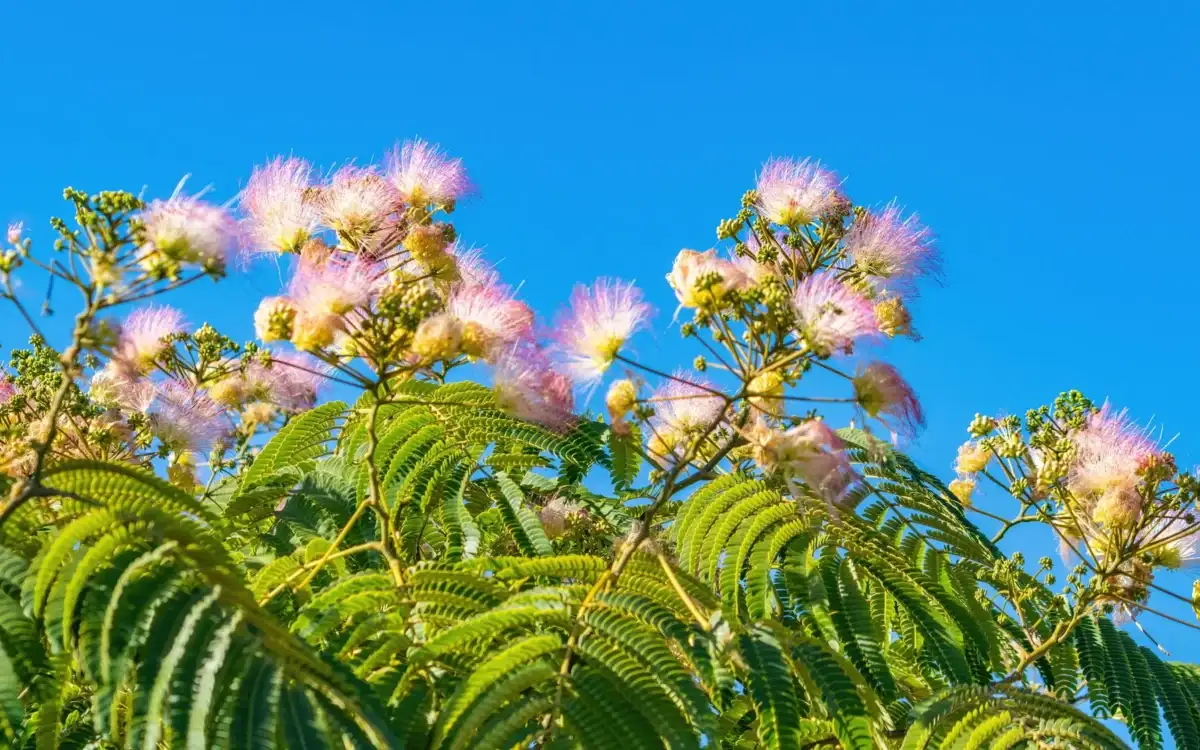
The mimosa tree (Albizia julibrissin), also called the silk tree or Persian silk tree, is a fast-growing tree from Asia with fern-like leaves and fluffy pink “powder-puff” flowers in summer. It’s beautiful and loved by hummingbirds, but it has real downsides: it’s invasive in much of the eastern and southern US, it’s short-lived, its wood breaks easily, and a fatal wilt disease kills many trees. If you already have one, it can be managed. If you’re thinking of planting one, consider the alternatives first.
Mimosa Tree at a Glance
| What | Details |
|---|---|
| Botanical name | Albizia julibrissin |
| Other names | Silk tree, Persian silk tree, pink siris |
| Native to | Asia, from Iran to China and Japan |
| Growing zones | USDA 6–9 |
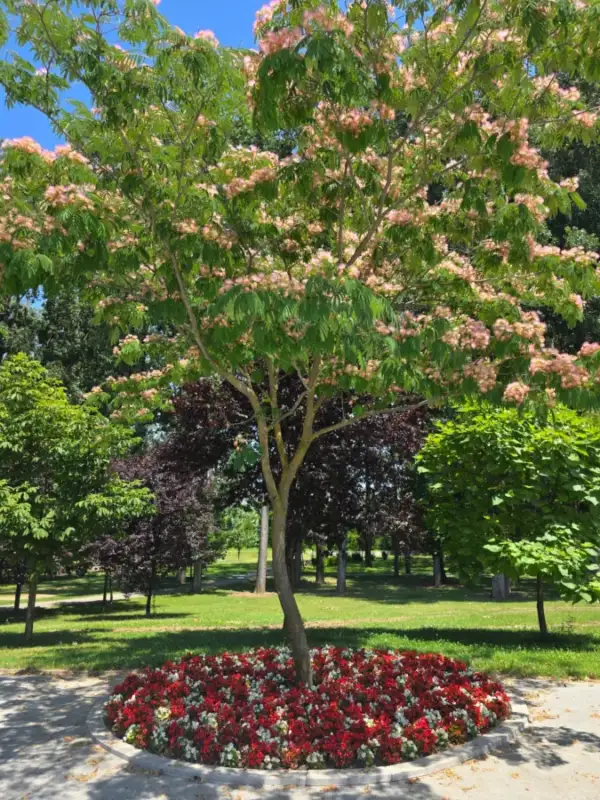
| Size | About 20–40 ft tall and often wider than tall |
| Growth rate | Fast |
| Lifespan | Short; often 10–30 years |
| Flowers | Pink (sometimes white) powder-puffs, late spring to midsummer, fragrant |
| Leaves | Fern-like; fold up at night and in rain; drop in fall |
| Invasive? | Yes, in much of the eastern and southern US |
What Does a Mimosa Tree Look Like?
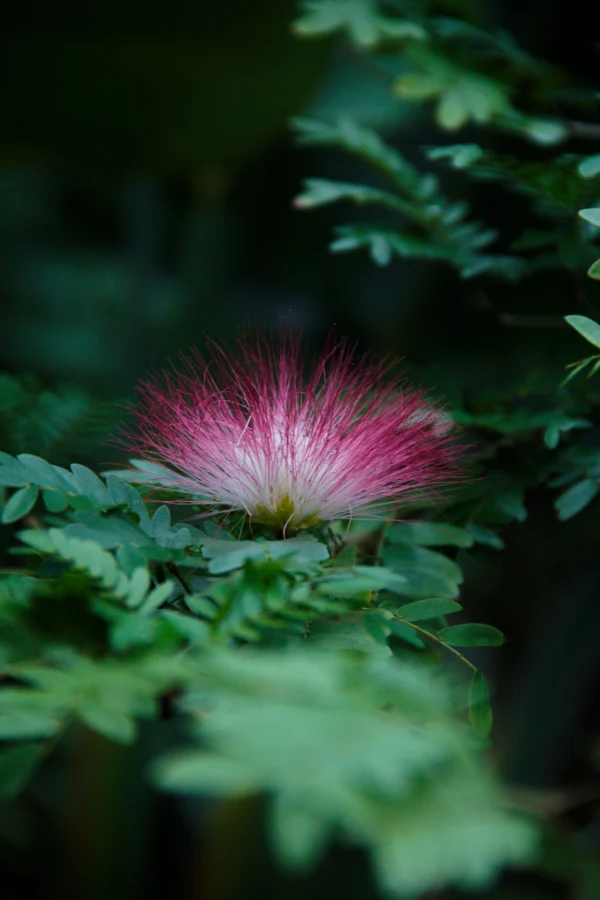
- Flowers: fluffy, silky pink pom-poms about 2 inches across, made of long thread-like stamens. They’re lightly fragrant and appear from late spring into midsummer (NC State gives May to July).
- Leaves: large, feathery, fern-like leaves split into many tiny leaflets. A fun detail: the leaflets fold up at night and during rain.
- Shape: a low, wide, umbrella-like canopy, often with several trunks.
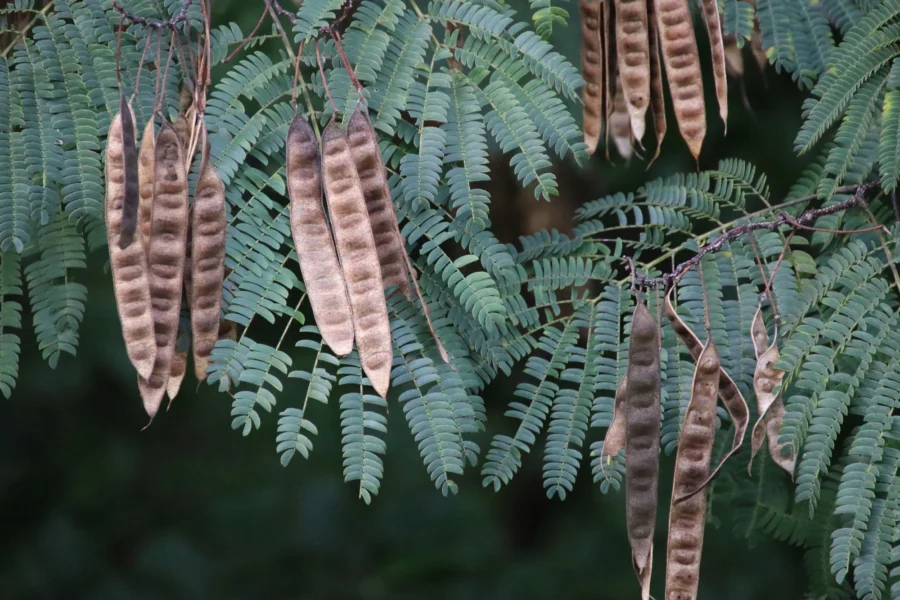
- Seed pods: flat, light-brown pods about 3–8 inches long, a bit like flat bean pods, that hang on into winter.
Mimosa Tree vs Other “Mimosas”
Many people searching for “mimosa” mean something else:
- Mimosa pudica (sensitive plant): a small, low plant whose leaves fold instantly when touched. It’s a different plant from the mimosa tree, though both have similar leaves.
- “Mimosa” acacia: in Europe and in perfume, “mimosa” usually means the yellow-flowered silver wattle (Acacia dealbata). Different plant again.
- The drink: orange juice and sparkling wine. Not a plant at all!
This article is about the pink-flowered tree.
How Fast and How Big Does a Mimosa Tree Grow?
Mimosa trees grow fast. Sources give mature sizes of about 15–40 feet tall and 20–50 feet wide, so they’re usually wider than they are tall. Forum owners regularly describe young trees that doubled or quadrupled in size in a single year.
They’re also short-lived. NC State gives an average lifespan of about 30 years, Arkansas Extension says they “seldom live more than 25 or 30 years,” and UF/IFAS says just 10 to 20 years.
Is the Mimosa Tree Invasive?
Yes, in much of the US. It’s listed as invasive in North Carolina (NC State), UF/IFAS calls it “invasive and not recommended” in Florida, and Wikipedia describes it as invasive from southern New York and New England west to Missouri and Illinois and south to Florida and Texas. The National Park Service’s mid-Atlantic guide says it “displaces native trees and shrubs.”
Why it spreads so well:
- Each tree makes huge numbers of seed pods. NC State says seeds are spread by wind, water and animals.
- The seeds last a long time. Arkansas Extension says they stay alive in the soil “for at least five years, and probably much longer.”
- It resprouts when cut back or damaged (NC State), which is why so many people say their cut-down mimosa “came back.”
Not every source is as worried: Arkansas Extension called it “neither overly assertive nor a serious threat” in 2004. But today most US experts recommend not planting it.
Mimosa Tree Problems
- Mimosa wilt (Fusarium wilt): a soil fungus that NC State calls “common and lethal.” Infected trees wilt, drop leaves and often die. There’s no cure. UF says it can spread between nearby trees through roots.
- Mimosa webworm: caterpillars that web leaves together and can strip the tree (Arkansas Extension).
- Weak wood: NC State says the wood is “weak and brittle,” and UF notes it tends to break in storms. Trunks often split as trees get bigger.
- Mess: expect lots of fallen flowers, leaves and seed pods (NC State).
- Surface roots: UF warns roots can raise walks and patios, so don’t plant it close to the house or paving.
Chocolate Mimosa and Other Varieties
- ‘Summer Chocolate’ (chocolate mimosa): deep burgundy-bronze leaves with pink flowers.
- ‘Merlot Majik’: another dark-leaved type.
NC State says ‘Summer Chocolate’ and ‘Merlot Majik’ are sterile and don’t reseed as much, which makes them a more responsible choice if you really want the look. Other sources don’t confirm this, so watch for seedlings anyway.
How to Care for a Mimosa Tree (If You Have One)
Mimosas are easy to grow; that’s part of the problem.
- Light: full sun for the best flowers.
- Soil: almost any well-drained soil. It handles poor soil and drought once established.
- Water: water young trees during dry spells. Established trees rarely need extra water.
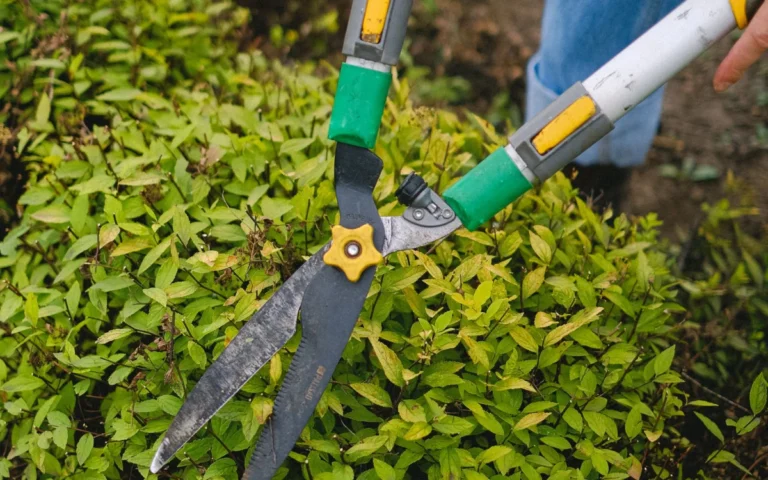
- Pruning: remove dead, damaged and crossing branches in late winter. Keep one or a few strong trunks with wide angles, since narrow forks are the ones that split. Our guide on how to trim bushes explains the basic cuts.
- Stop the spread: pull seedlings while they’re small (they come out easily when young), and pick off or rake up seed pods before they open if you can.
How to Get Rid of a Mimosa Tree
Cutting it down alone rarely works because it resprouts. The National Park Service guide says ground-level cutting “usually requires follow-up cuttings in combination with herbicide treatments due to re-sprouts,” and names systemic herbicides such as glyphosate and triclopyr. Always follow the product label and your local extension service’s advice, and keep cutting or treating new sprouts until they stop.
Mimosa Tree Benefits
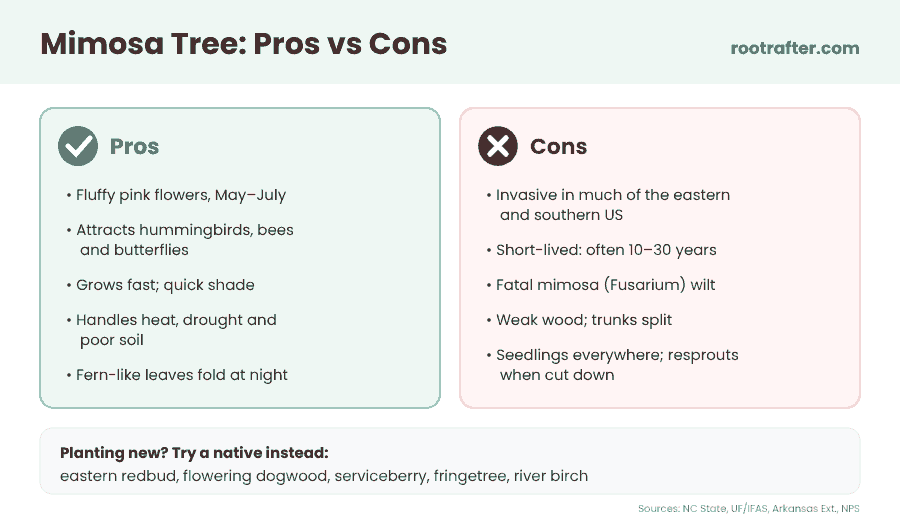
To be fair, the mimosa has good points:
- Pollinators love it. NC State says it attracts hummingbirds, bees, butterflies and songbirds.
- Fast shade on a hot, sunny site.
- Tough: handles heat, drought and poor soil.
- Traditional use: the bark and flowers have long been used in traditional Chinese medicine (NC State, Wikipedia). We don’t make any health claims; talk to a doctor before using any herbal product.
Better Trees to Plant Instead
If you want a similar look without the invasive problems, NC State and the National Park Service suggest native trees such as:
- Eastern redbud (pink spring flowers)
- Flowering dogwood
- Serviceberry
- Fringetree
- River birch (for fast shade)
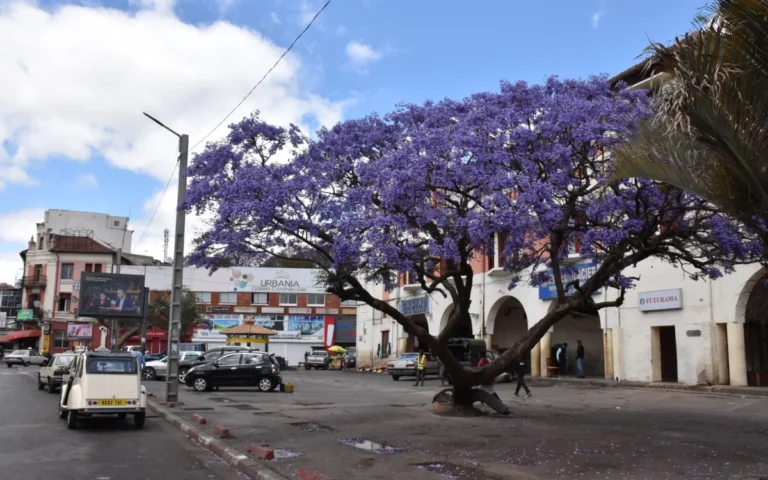
In warm, nearly frost-free areas, the jacaranda tree is another showy flowering tree to consider.
7 Mimosa Tree Mistakes Real Owners Make (From Gardening Forums)
These come up again and again in mimosa threads:
- Mixing it up with Mimosa pudica. People buy “mimosa” seeds expecting a tree and get a sensitive plant, or the reverse. Check the botanical name: Albizia julibrissin for the tree.
- Buying mislabeled seeds online. Several posts are about cheap online seeds that grew into something completely different.
- Letting seedlings grow. A single tree can fill a yard and a neighbor’s yard with seedlings. Pull them while they’re small.
- Cutting it down and expecting it to stay gone. It resprouts from the stump and roots. Plan for follow-up.
- Planting it close to the house. It grows fast and wide, the roots lift paving, and branches can break onto roofs.
- Ignoring split trunks. Large mimosas with narrow forks often split. Remove or reduce a split trunk before it fails.
- Expecting it to make an easy bonsai. Forum growers say the large, feathery leaves make mimosas hard to bonsai well.
Is a Mimosa Tree Toxic to Dogs?
NC State’s Plant Toolbox says mimosa seeds “contain a neurotoxin that when ingested can be toxic to livestock and dogs.” Keep dogs from chewing the pods and seeds, and call your vet if a dog eats them.
FAQ
Is a mimosa tree a good tree to plant?
For most US gardens, no. It’s invasive in much of the East and South, short-lived and prone to a fatal wilt. Native trees like redbud or dogwood are better choices.
How long do mimosa trees live?
Usually about 10 to 30 years.
What growing zones do mimosa trees grow in?
USDA zones 6 to 9.
When do mimosa trees bloom?
From late spring into midsummer, roughly May to July in much of the US.
Why do mimosa leaves close at night?
The leaflets naturally fold up at night and during rain, then open again in daylight.
Is chocolate mimosa invasive?
NC State says ‘Summer Chocolate’ is sterile and doesn’t reseed as much, but watch for seedlings anyway.
Final Thoughts
The mimosa tree is gorgeous for a few weeks every summer, and hummingbirds love it. But it’s invasive, short-lived, weak-wooded and prone to a fatal wilt. If you have one, enjoy it, keep its seedlings in check and watch for split trunks. If you’re choosing a new tree, a native like redbud or dogwood will give you flowers without the headaches.
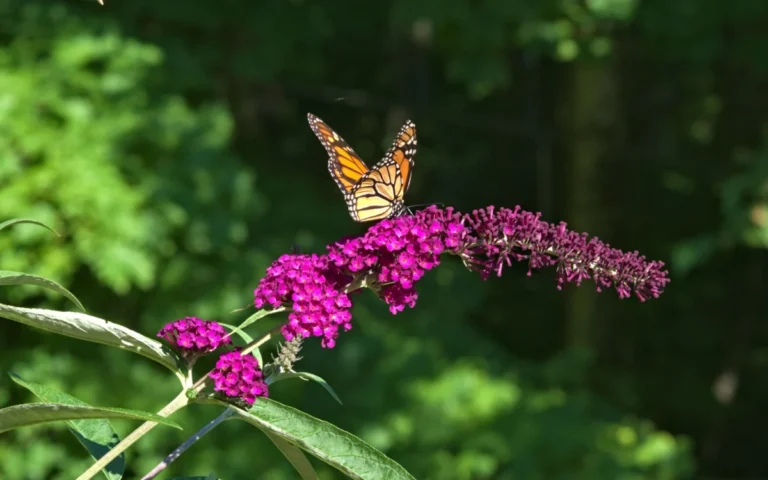
Want summer flowers that feed butterflies? See our butterfly bush care guide, including sterile varieties that won’t spread.