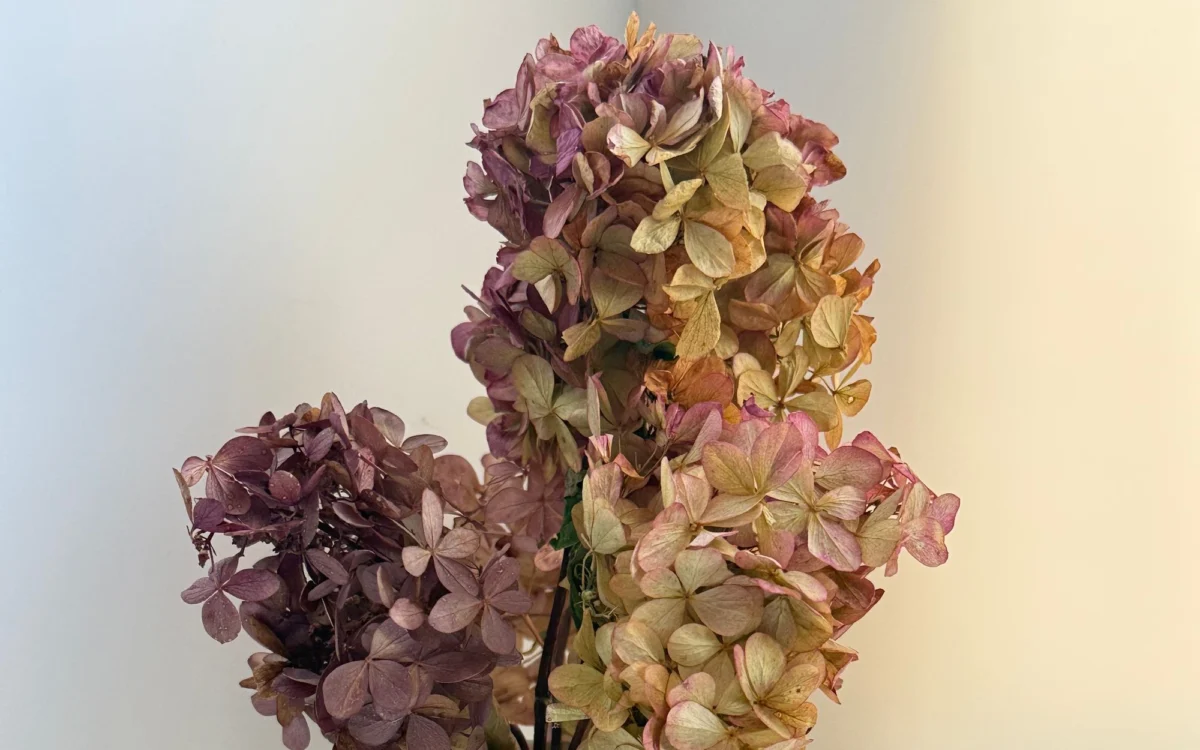
How to Dry Hydrangeas Without Wilting (4 Easy Methods)

The secret to drying hydrangeas is timing: cut the blooms late in the season when they’ve started to dry on the plant and feel slightly papery, not when they’re fresh and soft. Strip the leaves, then use the easiest method: stand the stems in an inch or two of water and let it evaporate in a cool, dark, airy spot. In one to three weeks you’ll have dried hydrangeas that last for years.
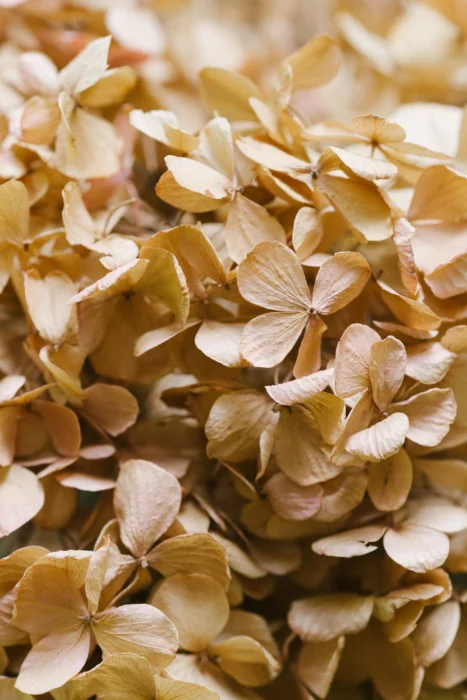
Quick Answer: The 5 Steps
- Wait until late summer or fall, when blooms have aged on the plant and feel papery.
- Cut stems about 12–18 inches long.
- Strip off all (or nearly all) the leaves.
- Stand them in 1–2 inches of water in a vase, in a cool, dark, airy room. Don’t top up the water.
- Wait 1–3 weeks until the petals feel crisp, then display them out of direct sun.
When to Cut Hydrangeas for Drying
Every source agrees: this is the step that decides success or failure.
- Cut too early and the blooms still hold too much water, so they wilt (Harmony Harvest Farm).
- Cut too late and they start developing brown spots (Harmony Harvest Farm).
- White Flower Farm’s side-by-side test found that “the more mature the blooms, the better they dried.” Young blooms collapsed.
How to tell they’re ready:
- Touch test: the petals feel slightly crisp, “almost like tissue paper” (Chicago Botanic Garden).
- Color test: white hydrangeas are ready when the top or center flowers start to show a slight green tint (Chicago Botanic Garden). Colored types often fade or turn vintage shades of green, burgundy or dusty pink.
- Pick the oldest blooms on the plant first.
Chicago Botanic Garden adds a warning: “If they’ve already wilted, it’s too late.”
Which Hydrangeas Dry Best?
- Panicle hydrangeas (like ‘Limelight’ and ‘Little Quick Fire’): Chicago Botanic Garden says they “hold their shape and color beautifully,” and Little Quick Fire outperformed the others in White Flower Farm’s test. One florist (Bracken & Berry) found panicle petals shrank, so results vary.
- Bigleaf / mophead hydrangeas: dry well, especially hung upside down (Bracken & Berry).
- Oakleaf hydrangeas: dry well (Chicago Botanic Garden).
- Smooth hydrangeas: White Flower Farm’s ‘Haas’ Halo dried well in a dry vase, but lost its flat shape when hung.
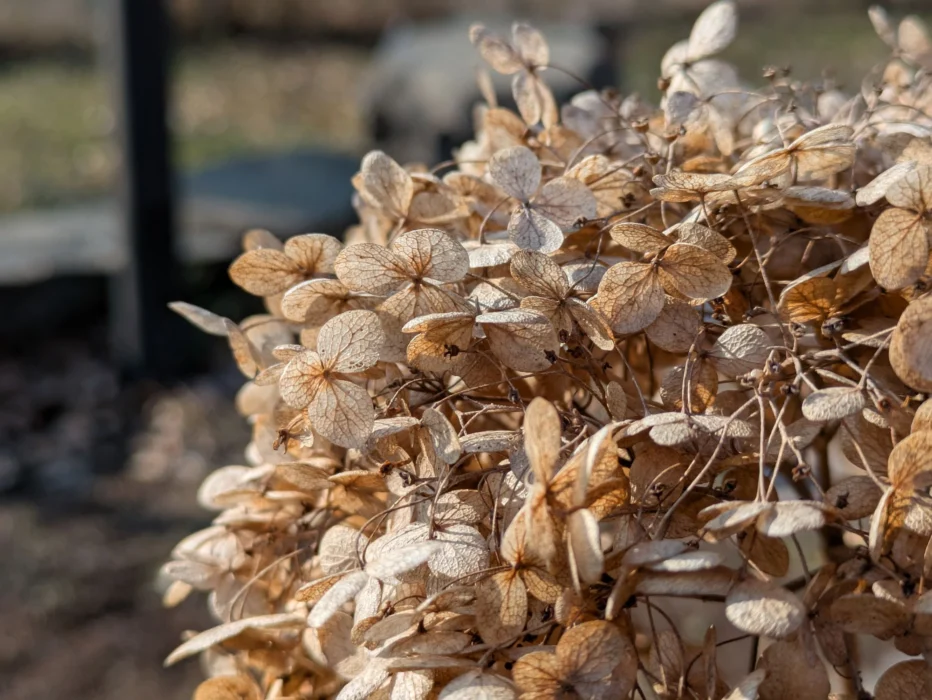
Bottom line: any hydrangea can dry if you cut it at the right stage.
Get the Stems Ready
- Cut stems about 12–18 inches long (White Flower Farm).
- Remove the leaves. White Flower Farm explains that stripping leaves saves the moisture in the stems for the flowers. Chicago Botanic Garden keeps “none or just one leaf close to the flower.”
- Don’t crowd the vase. Give each bloom space so air can move around it (Chicago Botanic Garden).
Method 1: The Water Vase Method (Easiest)
This is the most popular method, and the one we recommend for beginners.
- Put 1–2 inches of water in a vase (Harmony Harvest Farm says 2–3 inches; White Flower Farm used 1–2 inches).
- Stand the stems in it and place the vase in a cool, dark, well-ventilated spot, out of direct sunlight.
- Don’t add more water when it runs out.
- Wait until the blooms feel crisp.
How long it takes: sources vary from about one week in hot weather (White Flower Farm) to two weeks (Chicago Botanic Garden) or two to three weeks (Harmony Harvest Farm).
Why it works: the blooms dry slowly as the water disappears, so they keep their shape better than when dried quickly.
Note: one florist (Bracken & Berry) had petals start browning in water within two days and now prefers hanging, so if your blooms brown, try Method 2.
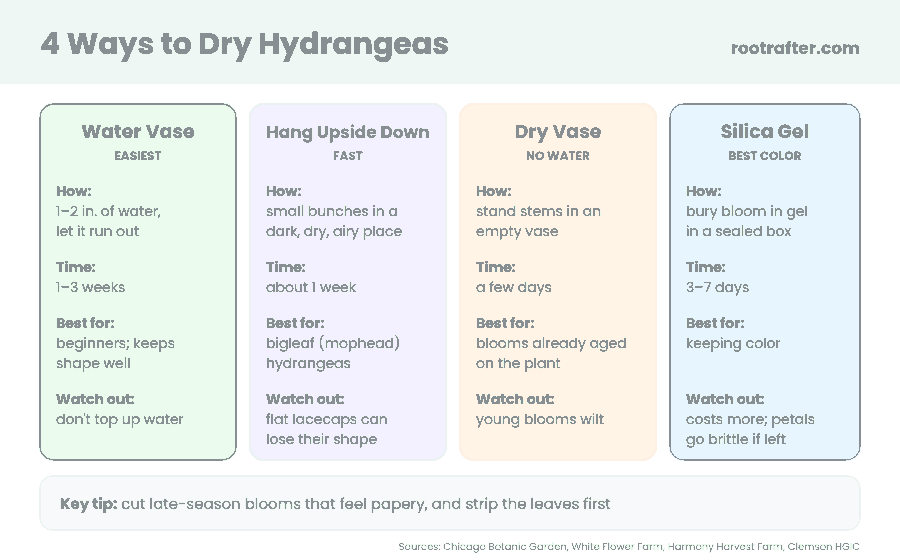
Method 2: Hang Them Upside Down
- Strip the leaves.
- Hang stems upside down individually, or in small bunches of 3–5 tied with a rubber band (Chicago Botanic Garden).
- Choose a dark, dry, ventilated place, such as a closet, attic or garage.
- Leave them until the petals feel crisp (often about a week).
Pros: fast, and Bracken & Berry found it the most reliable method for bigleaf hydrangeas. Cons: gravity can change the bloom’s shape. White Flower Farm’s flat lacecap bloom lost its shape when hung.
Clemson Extension says darkness helps preserve the color of air-dried flowers.
Method 3: The Dry Vase (No Water)
White Flower Farm also tried simply standing mature stems in an empty vase. They dried within days and did as well as the water method in their test. This works best for blooms that were already well aged on the plant.
Method 4: Silica Gel (Best Color)
Silica gel is a drying powder sold at craft stores. It keeps color better than air drying but costs more (Chicago Botanic Garden).
- Pour about 1 inch of silica gel into an airtight container (Clemson).
- Cut the stem short and set the bloom upright in the gel.
- Gently pour more gel around and over the bloom until it’s completely covered, with petals not touching each other.
- Seal the container.
- Wait 3–6 days (Chicago Botanic Garden) to about a week (Clemson). Don’t leave it much longer, or petals may turn brittle and crumble.
Clemson notes silica gel can be dried in the oven and reused.
How to Keep Dried Hydrangeas’ Color
- Keep them out of direct sunlight, both while drying and when displayed. Sun fades color fast.
- Dry them in the dark. Clemson says darkness helps preserve color.
- Use silica gel if color matters most.
- Seal them. Chicago Botanic Garden suggests a light coat of hairspray or flower sealant once dry to protect the petals.
- Keep them dry. Dried flowers last best in a dry room, away from steamy kitchens and bathrooms.
Expect some fading: Clemson notes pink flowers tend to fade most, while blue holds better.
Why Are My Hydrangeas Wilting Instead of Drying?
- They were cut too early. Fresh, soft blooms hold too much water and collapse. Wait until they feel papery on the plant.
- They’re crowded. Poor airflow slows drying and encourages browning.
- The room is too warm, humid or sunny. Move them somewhere cool, dark and airy.
- They wilted before you started. Already-wilted blooms won’t recover into nice dried flowers.
7 Hydrangea Drying Mistakes Real People Make (From Forums)
These come up again and again in “why did my hydrangeas wilt?” threads:
- Trying to dry fresh summer blooms. Soft, young blooms collapse. Wait for late season.
- Topping up the water. The method only works if the water is allowed to run out.
- Drying in a sunny window. Color fades and petals can brown.
- Leaving all the leaves on. They pull moisture away from the flowers.
- Hanging delicate lacecaps. Gravity can flatten or distort them. Use the vase method instead.
- Packing too many stems into one vase. Air needs to move between blooms.
- Expecting store-bought bouquets to dry like garden blooms. Fresh florist hydrangeas often wilt within days in a warm room. If you want them to dry, let them sit in a little water in a cool spot and accept some may not make it.
FAQ
Can you dry hydrangeas in water?
Yes. Stand them in 1–2 inches of water and let it evaporate without adding more. It’s the easiest method.
How long does it take to dry hydrangeas?
About one to three weeks in a vase, around a week hanging upside down, or 3–7 days in silica gel.
When should I cut hydrangeas for drying?
In late summer or fall, when the blooms feel papery and have started changing color on the plant.
How do you dry hydrangeas without them turning brown?
Cut them at the right stage, remove the leaves, dry them out of direct sun in a cool, airy room, and don’t crowd them.
How long do dried hydrangeas last?
With care, for years. Harmony Harvest Farm still displays an arrangement dried in 2018. Keep them out of sun and humidity.
Do I need to spray dried hydrangeas?
It’s optional, but a light coat of hairspray or flower sealant helps protect the petals (Chicago Botanic Garden).
Final Thoughts
Drying hydrangeas is easy once you get the timing right: cut late-season, papery blooms, strip the leaves, and let them dry slowly in a little water in a cool, dark spot. For the best color, use silica gel; for the least effort, the water vase method is hard to beat.
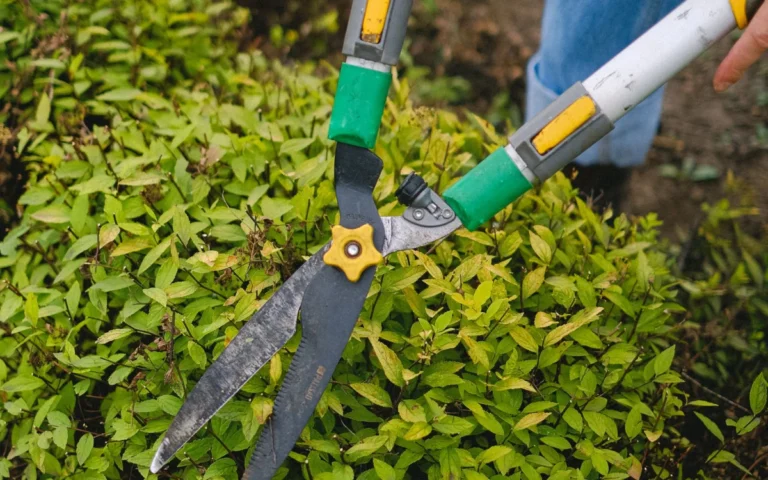
Growing hydrangeas and other shrubs? See our guides on how to trim bushes and butterfly bush care.