
How to Clean Shower Tiles and Grout (Easy Step-by-Step)

To clean shower tiles, spray them with warm water and a mild cleaner, let it sit for a few minutes, scrub with a nylon brush, then rinse and dry. For dirty grout, scrub with a baking soda paste, and use oxygen bleach or hydrogen peroxide for stains. Avoid vinegar and acids on natural stone and unsealed grout, and never mix bleach with vinegar or ammonia.
Quick Answer: 6 Steps
- Run the hot shower for a minute to loosen grime, then turn on the fan.
- Spray a mild cleaner (dish soap and warm water or an all-purpose bathroom cleaner) on the tiles.
- Wait 5–10 minutes.
- Scrub with a nylon brush or non-scratch sponge; use a grout brush on the lines.
- Rinse with clean water.
- Wipe or squeegee dry, so dirt and water spots don’t resettle (Bob Vila).
First: Know What You’re Cleaning
The right cleaner depends on your surfaces:
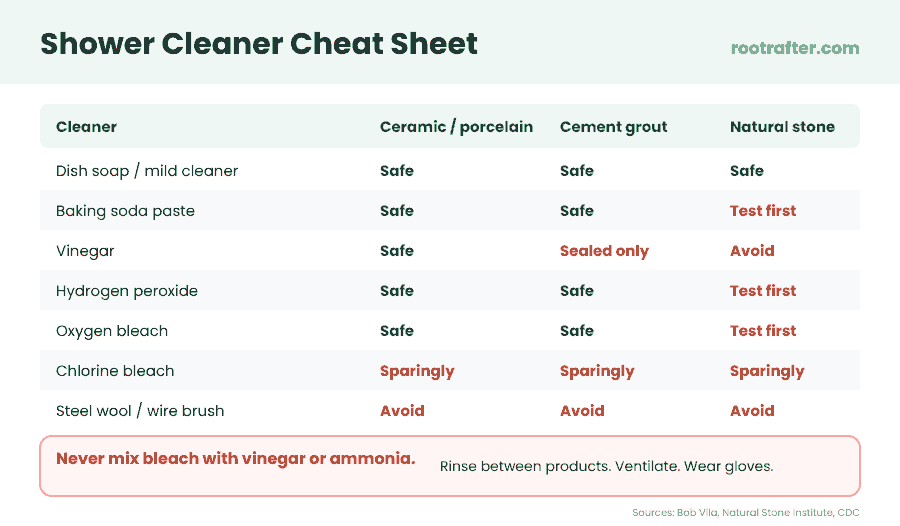
- Ceramic and porcelain tile: tough and non-porous. Most bathroom cleaners are fine.
- Natural stone (marble, travertine, limestone): these are mostly calcium carbonate, which is “sensitive to acidic solutions” (Natural Stone Institute). No vinegar, lemon or acidic cleaners. Use a neutral cleaner, stone soap or mild dish soap.
- Cement grout: porous. Bob Vila says “long-term use of caustic cleaners will erode grout,” and to avoid vinegar on unsealed grout.
- Epoxy grout: much more stain-resistant and easier to clean than cement grout (Bob Vila).
Not sure? Test any cleaner in a hidden spot first (Bob Vila).
How to Clean Shower Tiles
Everyday Tiles (Ceramic or Porcelain)
- Spray the tiles with warm water and a squirt of dish soap, or a mild bathroom cleaner.
- Leave it for 5–10 minutes to loosen soap film.
- Scrub with a soft nylon brush or non-scratch sponge.
- Rinse well and dry with a squeegee or microfiber cloth.
Natural Stone Tiles
Follow the Natural Stone Institute’s advice:
- Clean with a neutral cleaner, stone soap or mild dishwashing liquid and warm water.
- Rinse thoroughly and dry with a soft cloth.
- Too much soap can leave a film and streaks, so go easy.
- For soap scum, use a non-acidic soap scum remover.
- Avoid scouring powders, which can scratch some stones.
How to Clean Shower Grout
Start with the mildest method and only move up if needed.
Method 1: Warm Water and a Nylon Brush
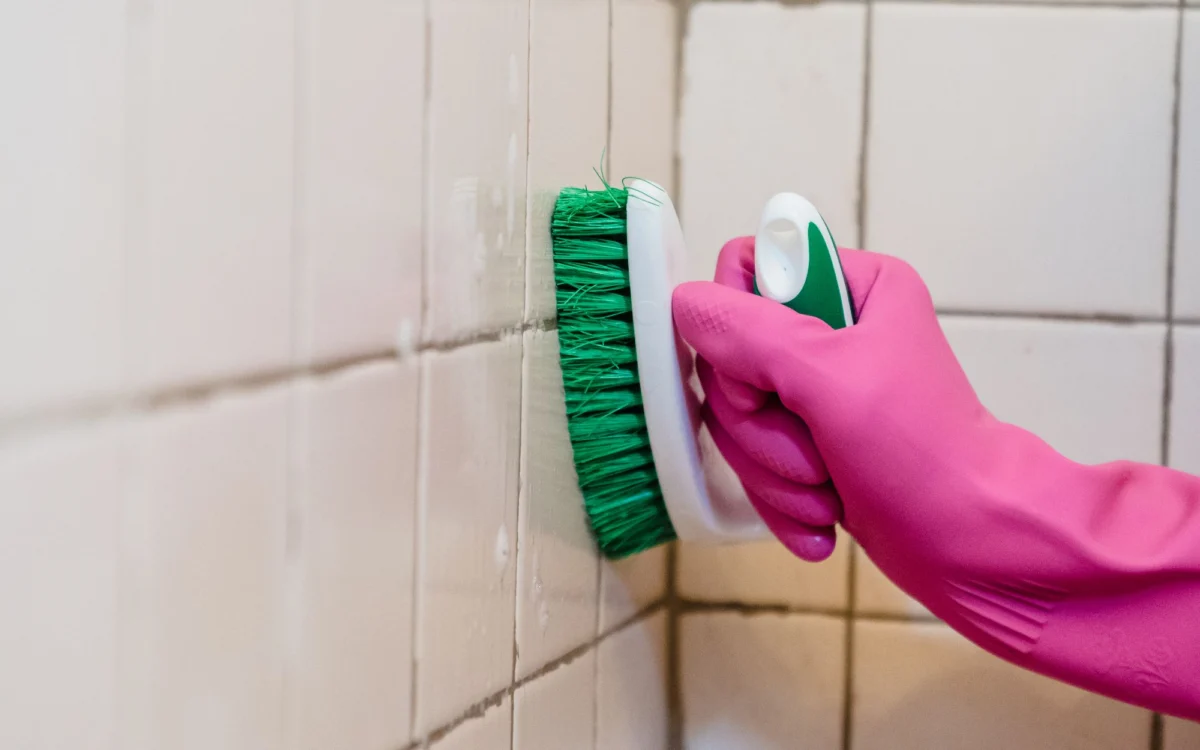
Scrub with warm water and a medium-bristle nylon brush, not a steel one (Bob Vila). Don’t flood porous grout with water and leave it wet.
Method 2: Baking Soda Paste
- Mix baking soda with a little water into a thick paste.
- Spread it over the grout lines.
- Let it sit a few minutes, scrub with a grout brush, then rinse and wipe dry.
On sealed ceramic tile grout, Bob Vila suggests spraying a half-and-half vinegar and water mix over the paste and scrubbing once it stops foaming. Skip the vinegar on unsealed grout and natural stone.
Method 3: Hydrogen Peroxide
Hydrogen peroxide is “typically safe for both sealed and unsealed grout,” says Bob Vila. Use it straight or mixed into a baking soda paste, scrub, then rinse. Some Reddit users found that using it very often wore their grout down, so save it for stains rather than weekly cleaning.
Method 4: Oxygen Bleach for Stubborn Stains
Oxygen bleach powder (such as OxiClean) mixed with water is a good choice for dingy grout.
- Mix with water into a liquid or paste, following the package.
- Apply to the grout and let it soak 10–15 minutes (Bob Vila).
- Scrub, rinse well and dry.
- Keep the room ventilated.
Method 5: Steam Cleaner
Steam cleaners and steam mops are effective, chemical-free tools for grout (Bob Vila). Reddit users who own one often call it the best cleaning purchase they’ve made.
Method 6: Chlorine Bleach (Only for Tough Mold Stains)
Use chlorine bleach “sparingly in extreme cases” (Bob Vila).
- Rinse first. Traces of vinegar mixed with bleach release a toxic gas (Bob Vila).
- Never mix bleach with ammonia or other cleaners (CDC, Natural Stone Institute).
- Wear rubber gloves and open a window.
- The CDC’s maximum strength for mold is 1 cup of household bleach per gallon of water.
How to Remove Soap Scum
- Ceramic and porcelain: spray with a soap scum remover or dish soap and warm water, wait 10 minutes, scrub and rinse.
- Natural stone: use only a non-acidic soap scum remover, or the Natural Stone Institute’s mix of about 1/2 cup ammonia per gallon of water. Don’t overdo ammonia, which can dull stone, and never combine it with bleach.
How to Clean Shower Tiles Without Scrubbing
There’s no zero-effort trick, but you can let cleaners do most of the work:
- Give oxygen bleach or a cleaner 10–15 minutes to soak before you touch it.
- Use a steam cleaner to blast grout lines.
- Prevent build-up with a daily squeegee so you rarely need a deep clean.
Keep Your Shower Clean Longer
- Squeegee after every shower. The Natural Stone Institute recommends it for wet areas to cut soap scum.
- Run the exhaust fan during and after showers. Keeping bathrooms dry helps stop mold (EPA).
- Do a little every day. The American Cleaning Institute’s tip: spot-clean while you’re already in the shower.
- Wipe weekly and rinse well.
- Seal cement grout as recommended by your installer or the sealer manufacturer (Bob Vila).
When Cleaning Isn’t Enough
If grout is cracked, crumbling or still black after deep cleaning, the stain may be deep in the grout or caused by moisture behind it. Options include a grout colorant (which several Reddit users say worked well on stained grout) or regrouting. Bob Vila’s advice: keeping grout clean and sealed is easier than having to regrout. If dark spots keep returning, see our guide to what black mold looks like.
7 Shower Cleaning Mistakes Real People Make (From Forums)
- Mixing bleach with vinegar or ammonia. It creates toxic fumes. Rinse between products.
- Using vinegar on marble or travertine. Acids etch natural stone.
- Scrubbing grout with steel wool or a wire brush. It can remove grout and scratch tile (Bob Vila).
- Using harsh cleaners every week. Strong acids and caustics slowly erode grout.
- Not rinsing. Leftover cleaner leaves film and attracts dirt.
- Leaving the shower wet. Moisture brings back mildew within days.
- Cleaning new grout too soon. Reddit renters found strong cleaners damaged freshly installed grout. Follow the installer’s cure time.
FAQ
What is the best thing to clean shower tile grout?
Start with a baking soda paste and a nylon grout brush. For stains, use oxygen bleach or hydrogen peroxide.
Can I use vinegar on shower tiles?
On sealed ceramic or porcelain tile, diluted vinegar is fine occasionally. Don’t use it on natural stone (marble, travertine, limestone) or unsealed grout.
How often should I clean shower tiles?
Squeegee daily and give the shower a light clean weekly. Deep-clean grout every few months or when it looks dingy.
How do I get black stains out of shower grout?
Try oxygen bleach or hydrogen peroxide first. For mold stains, use a diluted chlorine bleach solution with ventilation, and never mix it with other cleaners.
Is a Magic Eraser safe on grout?
Bob Vila says a Magic Eraser with warm water can remove the gray film on white grout. Test a hidden area first.
Final Thoughts
Cleaning shower tiles is easy when you match the cleaner to the surface: mild soap for tile, baking soda and oxygen bleach for grout, and only neutral cleaners for natural stone. Rinse, dry, and never mix bleach with anything acidic or ammonia. A 30-second squeegee after each shower will save you most of the scrubbing.
Bathroom emergency? Here is how to unclog a toilet without a plunger.