
What Does Black Mold Look Like? How to Spot and Remove It

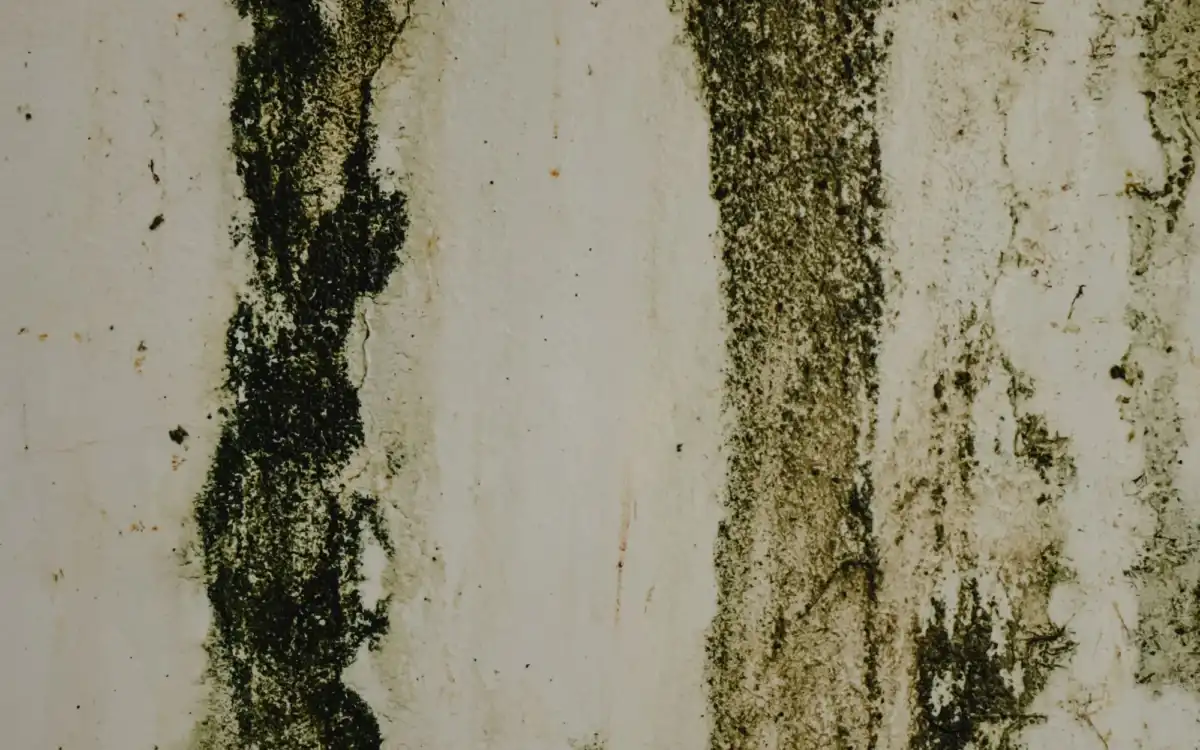
Black mold usually looks like fuzzy or slimy patches of dark green, gray or black spots, often in damp places like showers, window sills, under sinks and on water-damaged drywall. It often smells musty. But here’s what most pages won’t tell you: you can’t tell how risky a mold is from its color. The CDC says all molds should be treated the same way, so if you see or smell mold, fix the moisture and clean it up.
Quick Answer
- Looks like: dark spots or patches (black, dark green or gray); can be fuzzy, powdery or slimy.
- Smells: musty or earthy (CDC).
- Grows where: anywhere that stays damp: showers, window frames, behind leaky pipes, in attics and basements, on wet drywall and wood. If it keeps coming back around a window, the seal may be failing: see how to reseal windows.
- Is it dangerous? It can cause health effects in some people, especially those with allergies, asthma or weak immune systems (CDC). Color doesn’t tell you which mold it is.
- What to do: fix the water problem, then clean small areas (under about 10 square feet) yourself with detergent and water. Call a professional for bigger areas (EPA).
What Does Black Mold Look Like?
The CDC says simply: “Mold can look like spots of many different colors, and it can smell musty.” Mold that looks black can be:
- Small black dots in shower grout, caulk or around a window frame
- Fuzzy dark green or black patches on drywall, ceilings or the back of furniture
- Slimy or wet-looking black growth where water keeps leaking
- Gray-black staining spreading out in a circle or along a water line
The mold people usually mean by “black mold” is Stachybotrys chartarum. The CDC describes it as “a greenish-black mold” that grows on materials with a lot of cellulose, such as gypsum board (drywall), fiberboard and paper, and that it needs constant moisture to grow. So it’s most likely after a long leak or flood, not on a shower tile you clean every week.
On Wood
On wood, mold often looks like dark speckles or a blotchy gray-black stain, sometimes with a fuzzy surface. It’s common on window sills, attic rafters and around leaks.
In the Shower
In a shower, black spots usually grow on grout, silicone caulk and the shower curtain, where water sits after every use. Daily drying and good ventilation help stop it coming back.
Black Mold vs Mildew vs Dirt
| Mildew | Mold (including “black mold”) | Dirt or soot | |
|---|---|---|---|
| Looks | Flat, powdery, white, gray or yellow | Fuzzy, slimy or raised; any color including black and green | Flat; no texture |
| Where | Surfaces: grout, window sills, fabrics | Can grow into porous materials like drywall and wood | Anywhere |
| Smell | Mild musty | Often strong musty | None |
| Comes back after cleaning? | Yes, if damp | Yes, if the moisture isn’t fixed | No |
This table is a general rule of thumb, not a lab test. Mildew is a type of mold that grows flat on surfaces, so treat both the same way: fix the moisture and clean it off.
Is Black Mold Dangerous?
Here is what official sources say, in plain words:
- Color doesn’t tell you the risk. The CDC says “It is not necessary to determine what type of mold you may have,” and that all molds should be treated the same way when it comes to health risks and removal.
- Health effects vary. The CDC says exposure to damp and moldy places may cause a variety of health effects, or none at all. Some people get a stuffy nose, sore throat, coughing, wheezing, burning eyes or a skin rash.
- Some people are at higher risk: people with asthma or mold allergies may have severe reactions, and people with weak immune systems or chronic lung disease can get lung infections from mold (CDC).
- “Toxic black mold” claims: the CDC says no test exists that proves a link between Stachybotrys chartarum and particular health symptoms. It should still be removed.
If you or someone in your home has health symptoms you think are related to mold, talk to a doctor. EPA advises consulting a health professional before cleaning up if you have health concerns.
Do You Need a Mold Test?
Usually not. The CDC “does not recommend mold testing,” and EPA says that when mold is visible, “sampling is unnecessary” in most cases. Your money is better spent fixing the leak and cleaning up.
How to Remove Small Areas of Mold
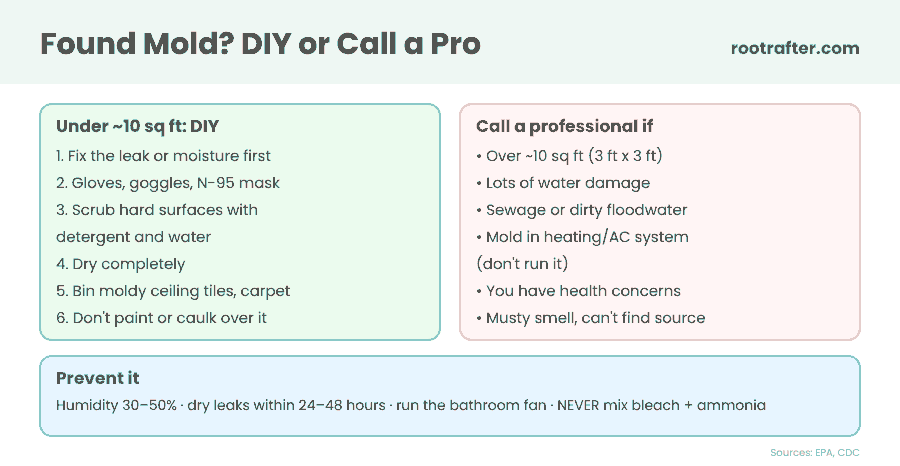
EPA says you can usually handle it yourself if the moldy area is less than about 10 square feet (roughly a 3 ft by 3 ft patch).
- Fix the water problem first. “The key to mold control is moisture control” (EPA). Repair leaks and dry everything.
- Protect yourself. Wear gloves, goggles without vent holes and an N-95 respirator (EPA). Open windows for fresh air (CDC).
- Scrub hard surfaces (tile, glass, sealed wood, metal) with detergent and water, then dry completely (EPA).
- Bleach is optional, not required. The CDC allows a solution of no more than 1 cup of household laundry bleach in 1 gallon of water; EPA says bleach isn’t recommended as a routine practice. Either way: never mix bleach with ammonia or other cleaners, because it makes a poisonous gas (CDC).
- Throw away porous materials like ceiling tiles, carpet and badly affected drywall if they’re moldy (EPA).
- Don’t paint or caulk over mold (EPA). It grows back underneath.
When to Call a Professional
Call a mold remediation professional when (EPA):
- The mold covers more than about 10 square feet, or there was a lot of water damage
- The water was sewage or other contaminated water
- You suspect mold is in your heating, ventilation or air conditioning (HVAC) system. Don’t run the system until it’s checked.
- You or your family have health concerns
- You smell mold but can’t see it, which can mean it’s hidden in walls or under floors
How to Stop Mold Coming Back
- Keep indoor humidity below 60%, ideally 30–50% (EPA). The CDC says no higher than 50%.
- Dry wet areas within 24–48 hours after a leak or spill (EPA, CDC).
- Run the bathroom fan during and after showers, and open a window when you can.
- Fix dripping pipes, roof leaks and condensation on windows quickly.
- Clean shower grout and caulk regularly before spots build up.
6 Black Mold Mistakes Real People Make (From Forums)
- Panicking because it’s black. Many molds look black. Treat every mold the same: fix the moisture and remove it.
- Pointing a fan straight at the moldy area. Restoration pros on Reddit warn this can blow spores around the house. Ventilate with fresh air instead.
- Cleaning the mold but not the leak. It comes back within weeks.
- Painting or caulking over it. EPA says don’t.
- Mixing bleach with other cleaners. Bleach plus ammonia makes a poisonous gas.
- Scrubbing without gloves, goggles or a mask.
FAQ
What does black mold look like on walls?
Dark green, gray or black spots or patches, often fuzzy or slimy, usually near a leak, window or other damp area. It may smell musty.
Is black mold in the shower dangerous?
Small spots on grout and caulk are common and can be cleaned with detergent and water. Clean them regularly and improve ventilation. If you have asthma or allergies, take extra care and wear gloves and a mask.
How can I tell mold from mildew?
Mildew is usually flat and powdery (white or gray) on surfaces. Mold is often fuzzy or slimy, can be black or green and can grow into materials like drywall and wood.
Should I test for black mold?
The CDC doesn’t recommend testing. If you can see or smell mold, remove it and fix the moisture problem.
Can I remove black mold myself?
Yes, if the area is under about 10 square feet and you wear protective gear (EPA). Call a professional for larger areas.
Final Thoughts
Black mold looks like dark green, gray or black patches in damp places, and it often smells musty. Don’t worry about the exact color or type. Fix the moisture, clean small areas with detergent and water while wearing protection, and call a professional for anything bigger than about 10 square feet.
Fighting black spots in the bathroom? See our guide on how to clean shower tiles and grout.