
How to Propagate Pothos Easily: A Step-by-Step Guide

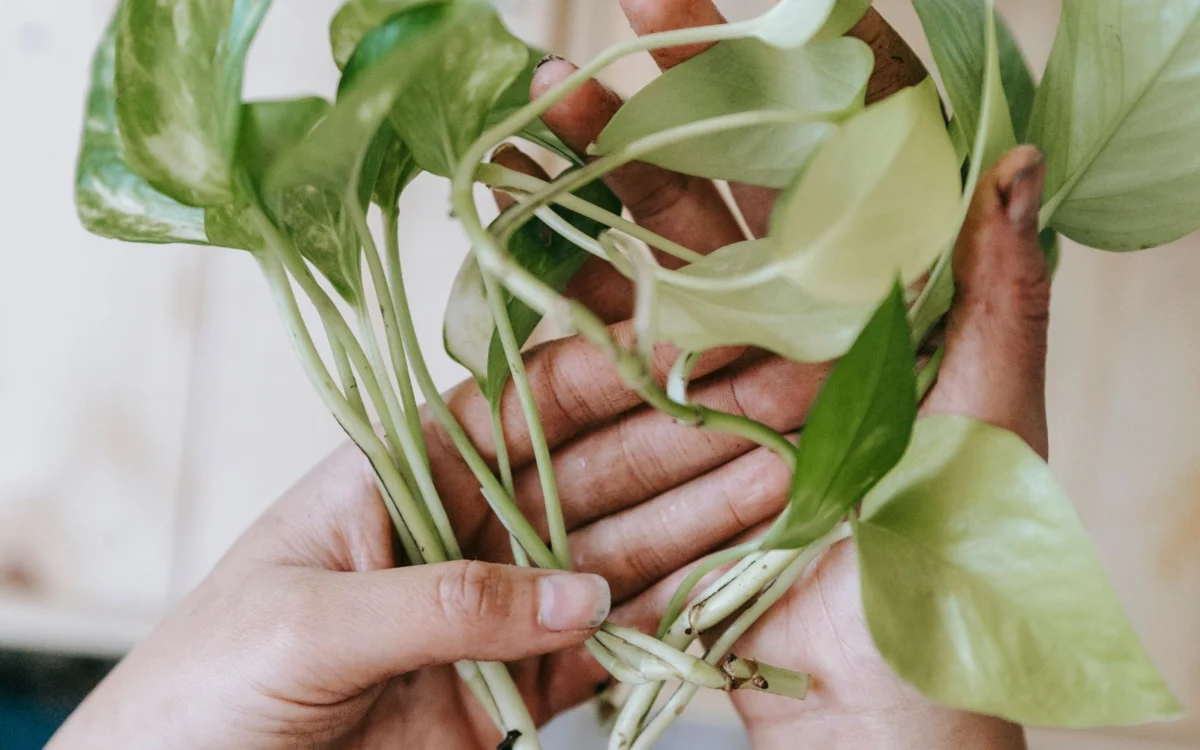
To propagate pothos, cut a 4–6 inch piece of vine just below a node (the small bump where a leaf meets the stem). Remove the lowest leaf, then place the cutting in water or moist soil. Keep it in bright, indirect light. Small roots usually start within a few weeks. Pot it up once they are 1–2 inches long, usually about 3–6 weeks after cutting.
That’s the short version. Below you’ll learn exactly where to cut, which method suits you, and how to fix the common problems that make cuttings rot or stall.
What You Need
- A healthy pothos plant (any type: golden, marble queen, neon, N’Joy and so on)
- Clean, sharp scissors or pruning snips
- Rubbing alcohol to clean the blades
- Gloves (optional): pothos sap contains calcium oxalate, which can irritate skin
- A clear glass or jar (for water propagation) OR a small pot with drainage holes and fresh potting mix (for soil propagation)
- Optional: rooting hormone. It can speed things up, but pothos roots well without it.
Where to Cut Pothos to Propagate
This is the step most people get wrong. A pothos cutting only grows roots from a node. A node is the slightly swollen bump on the stem where a leaf grows out. On many pothos you’ll also see a small brown nub there: that’s an aerial root, and it turns into a real root very quickly.
Follow these rules:
- Cut about ¼ inch below a node.
- Each cutting needs at least one node, but 2–4 nodes give you a stronger, fuller plant.
- A leaf on its own will not grow a new plant. It may grow roots in water, but without a node it can’t make new vines.
- Choose healthy, green vines. Avoid yellow, mushy or very thin stems.
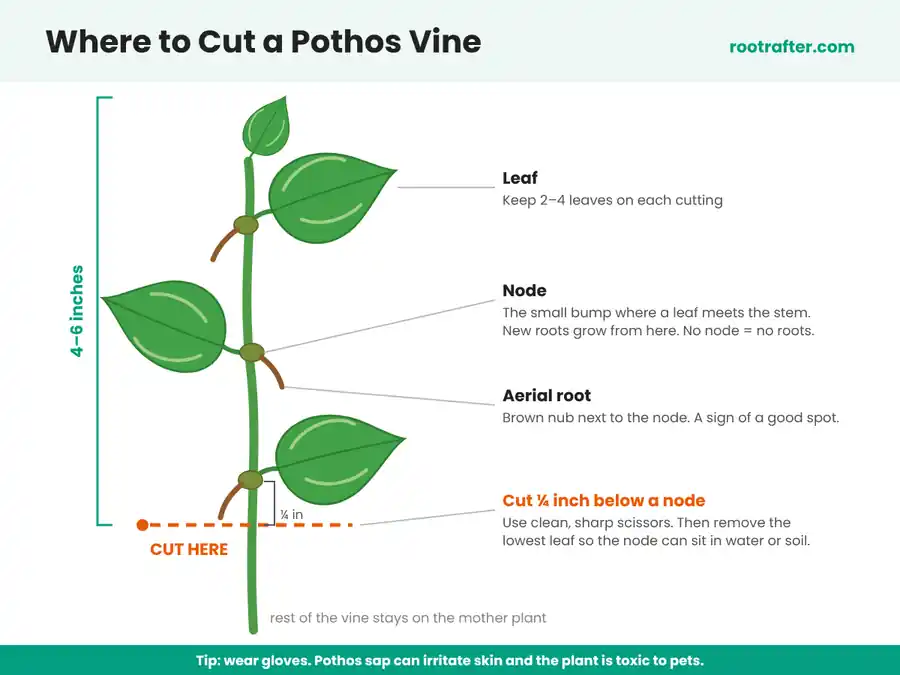
Tip: you can cut one long vine into several pieces, each with 1–2 nodes and a leaf. One trim can give you 5–10 new cuttings.
How to Propagate Pothos in Water (Step by Step)
Water propagation is the easiest method for beginners because you can watch the roots grow.
- Clean your scissors with rubbing alcohol.
- Cut a 4–6 inch piece with 2–4 nodes, cutting just below the lowest node.
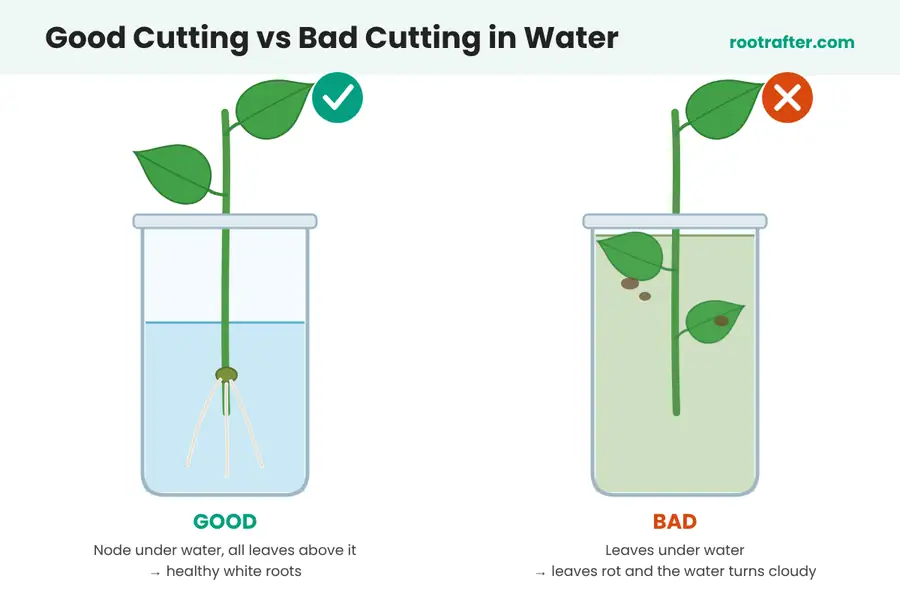
- Remove the leaf closest to the cut end. Leaves sitting in water rot.
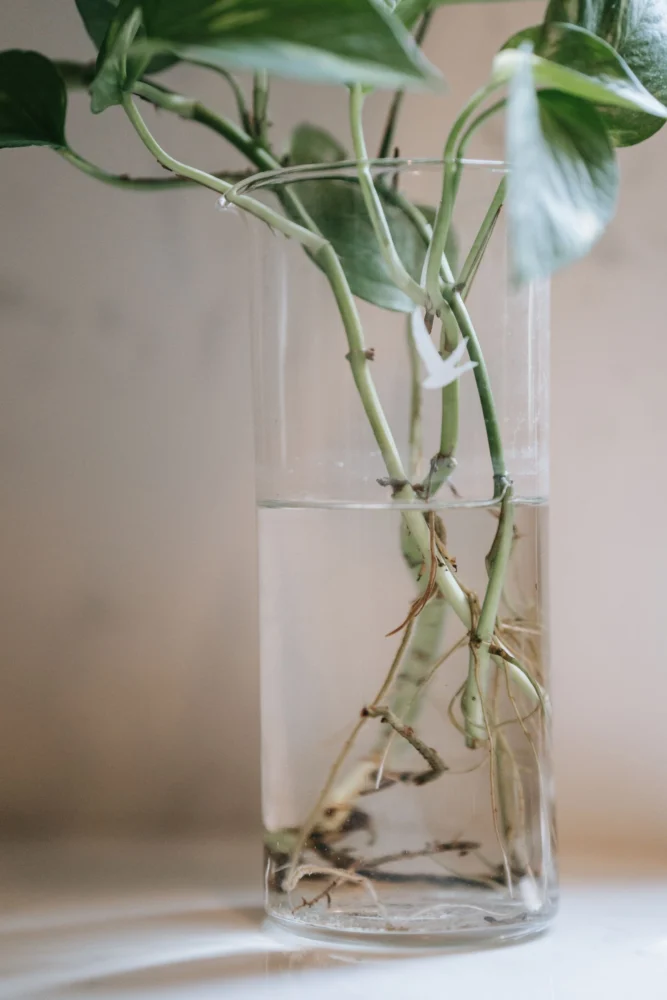
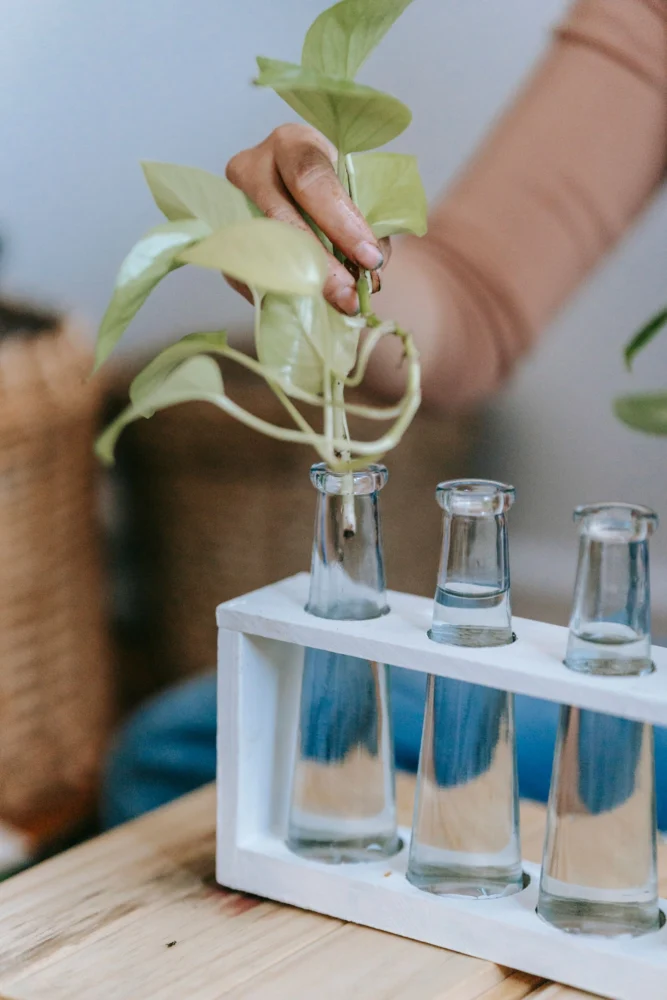
- Put the cutting in a glass of room-temperature water so at least one node is under water. Keep the leaves above the waterline.
- Place the glass in bright, indirect light. Avoid harsh direct sun, which can heat the water and scorch the leaves.
- Change the water every 5–7 days, or sooner if it looks cloudy.
- Wait for roots. Small white roots usually start within a few weeks.
- Move it to soil once the roots are 1–2 inches long (see “When to Move Water Cuttings to Soil” below).
How to Propagate Pothos in Soil
Soil propagation skips the “water to soil” move, so the plant doesn’t have to adjust twice. It’s a good choice if you’ve lost cuttings after potting them up before.
- Take a cutting the same way (4–6 inches, 2–4 nodes, lowest leaf removed).
- Optional: dip the cut end in rooting hormone.
- Fill a small pot with moist, well-draining potting mix.
- Push the cutting in so at least one node is buried about 1 inch deep. You can plant 3–5 cuttings in one pot for a fuller plant.
- Water lightly and keep the soil evenly moist, but not soggy, for the first few weeks.
- Keep it in bright, indirect light. A clear plastic bag loosely over the pot can hold in humidity. Open it every few days for fresh air.
- After 3–4 weeks, give a very gentle tug. If you feel resistance, roots have formed.
Other Ways to Propagate Pothos
- Sphagnum moss: wrap the nodes in damp moss inside a clear container. Roots grow fast, and the switch to soil is easy. Good for rare or expensive varieties.
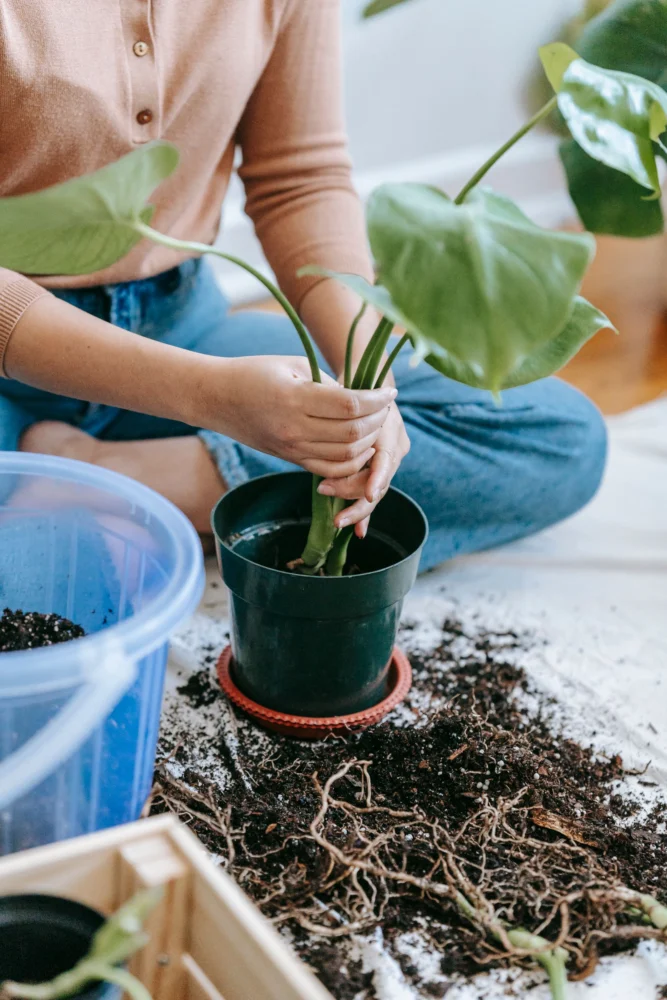
- Layering (pinning): without cutting the vine, pin a node onto the soil of a second pot next to the mother plant. Once it roots, snip it free. This is the safest method because the vine keeps getting food from the mother plant.
- Division: if your pothos is big and has several stems from the base, you can gently split the root ball into two plants when repotting.
Water vs Soil vs Moss: Which Method Is Best?
| Method | Difficulty | Time to roots | Best for | Main risk |
|---|---|---|---|---|
| Water | Very easy | 2–4 weeks | Beginners; watching roots grow | Shock when moved to soil |
| Soil | Easy | 3–4 weeks | Skipping the transplant step | Rot if the soil stays soggy |
| Sphagnum moss | Medium | 2–4 weeks | Rare or slow varieties | Moss drying out |
| Layering | Easy | 2–4 weeks | Zero-risk propagation | Takes up space next to the mother plant |
| Division | Medium | Instant | Large, crowded plants | Damaging roots when splitting |
How Long Does Pothos Take to Root?
In warm conditions with bright, indirect light, most pothos cuttings start rooting within a few weeks in water. They are usually ready for soil in about 3–6 weeks. In winter or in a cool, dim room, expect it to take longer. Variegated types with a lot of white or cream (like marble queen) can be slower than plain green or golden pothos.
When to Move Water Cuttings to Soil
Pot up the cutting when its roots are 1–2 inches long. Don’t wait too long: the longer roots grow in water, the harder the switch to soil.
To make the move easier:
- Use a small pot (4 inches is plenty) with drainage holes.
- Plant it in fresh, well-draining potting mix.
- Keep the soil a little more moist than usual for the first 1–2 weeks while the roots adjust.
- Expect one or two leaves to droop or yellow at first. That’s normal.
Common Pothos Propagation Problems (and Fixes)
- The cutting is rotting or the stem turned mushy: the water wasn’t changed often enough, or a leaf was sitting in it. Cut off the rotten part above a healthy node and start again in fresh water.
- No roots after 4 weeks: check that there’s a node under water or soil. Move it somewhere warmer and brighter.
- Leaves turning yellow: usually the cutting is using energy for roots, or it’s getting too much direct sun. Remove yellow leaves and keep going if the stem is firm.
- Roots grew, but the plant wilted in soil: this is transplant shock. Keep the soil evenly moist and the light bright but indirect. Most cuttings recover within 1–2 weeks.
- A leaf-only cutting grew roots but no new vines: it had no node. Start again with a proper cutting.
6 Mistakes Real Growers Make (From Plant Forums)
We read dozens of Reddit threads from people whose pothos cuttings failed. The same mistakes come up again and again:
- Leaf stems sitting in the water. The thin stem that holds each leaf (the petiole) rots if it’s under water. Only the node and the main vine should be submerged.
- Cuttings that are too long. People put a long vine with many leaves in one jar, and it struggles. Cut it into shorter pieces with 1–2 nodes each, cutting just above the next node. One long vine becomes several healthy cuttings.
- Single-leaf cuttings with no stem. A tiny cutting with one leaf and barely any stem often rots before it roots. Give each cutting a little stem on both sides of the node.
- Planting too deep in soil. In soil propagation, burying leaves or too much stem leads to rot. Bury only the node, about 1 inch deep, and keep the leaves above the soil.
- Putting cuttings in direct sun “to root faster”. It doesn’t speed things up. It warms the water and scorches the leaves. Bright, indirect light is enough.
- Throwing away leafless pieces. Many growers say a bare node with no leaf can still root and grow, just more slowly. If you trimmed off a leafless section, try it in water before you throw it out.
What about “letting the cut dry first”? You’ll see mixed advice online. Some growers let the cut end dry for a few hours, while others say pothos doesn’t need it. Pothos roots fine either way, so you can skip this step.
Is Pothos Safe for Pets?
No. The ASPCA lists pothos as toxic to cats and dogs. It contains insoluble calcium oxalates, which can cause mouth irritation, drooling, vomiting and difficulty swallowing. Keep cuttings and jars out of reach of pets and young children. If a pet chews a plant, call your vet or the ASPCA Animal Poison Control Center.
FAQ
Can you propagate pothos from a single leaf? Not really. A leaf without a node may grow roots, but it won’t grow a new vine. Always include at least one node.
Should I use rooting hormone for pothos? It’s optional. Pothos roots easily on its own. Rooting hormone can help in soil propagation or in cooler months.
Can I propagate golden pothos the same way? Yes. Golden, marble queen, neon, N’Joy and most other pothos varieties all propagate the same way. Highly variegated types are just a bit slower.
What is the best time of year to propagate pothos? Spring and summer, when the plant is actively growing. Indoors, it can work year-round. It’s just slower in winter.
Can I keep pothos in water forever? It can survive in water for a long time, but it grows better and stays healthier in soil. If you keep it in water, change the water regularly and add a very weak liquid fertilizer occasionally.
Why are my pothos cuttings not rooting? The most common reasons are no node under water, cold temperatures or low light. Fix those three, and most cuttings root within a few weeks.
Final Thoughts
Propagating pothos is one of the easiest ways to get free plants. Cut below a node, keep the node in water or soil, give it bright, indirect light, and be patient for a few weeks. Once you’ve done it once, you can turn one plant into a whole shelf.
Want more easy houseplants? See our guides on how to plant succulents, how to care for orchids and christmas cactus care.